
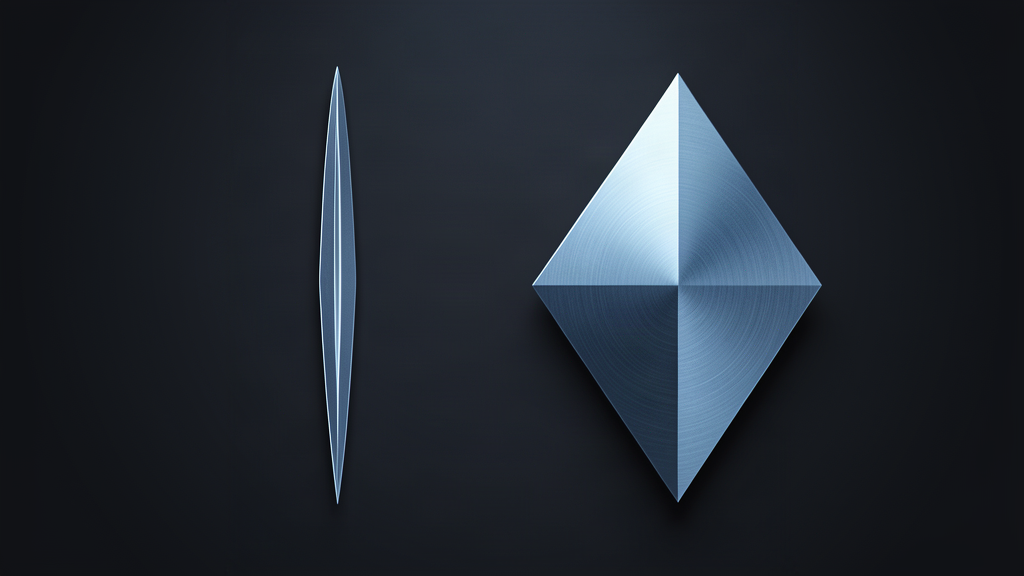
Dagger knives and stilettos are often lumped together as double-edged blades, but they are designed around two very different jobs. A dagger is built to both cut and thrust, while a stiletto is a needle-like specialist that trades cutting ability for penetration. Understanding the difference helps you choose the right blade — and understand why most everyday carry folders borrow from one or the other.
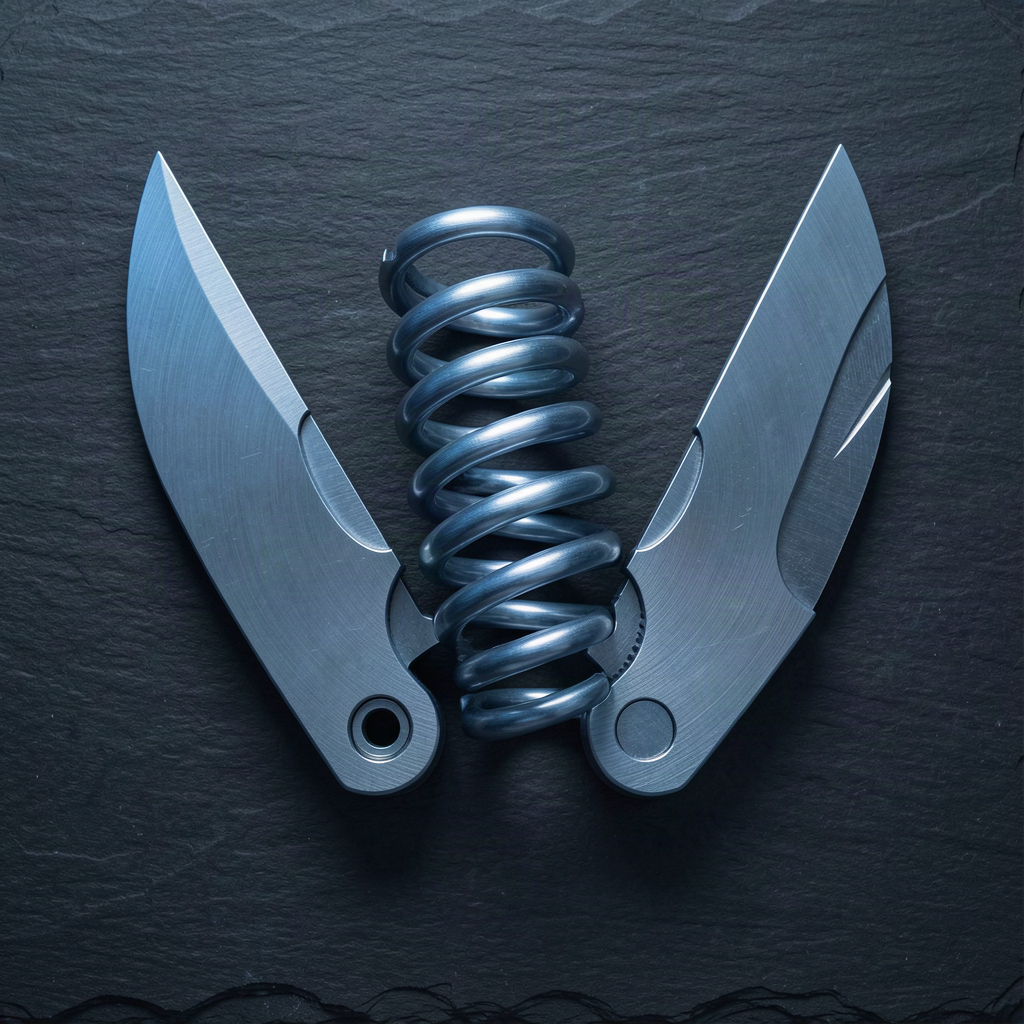
A dagger cuts and thrusts; a stiletto is built for penetration alone.
What Is a Dagger Knife?
A dagger is a fighting knife with a very sharp point and usually one or two sharp edges, designed or capable of being used as both a cutting and a thrusting weapon. In the modern sense, a dagger is defined by a short blade with a sharply tapered point, a central spine or fuller, and usually two cutting edges sharpened along the full length of the blade. Most daggers also carry a full crossguard to keep the hand from riding forward onto the edge.
Because daggers are primarily weapons rather than tools, knife legislation in many places restricts their manufacture, sale, possession, transport, or use — a point worth checking before you carry one.
What Is a Stiletto?
A stiletto is a knife with a narrow blade and an acuminated tip that tapers to a sharp point. That slender cross-section reduces friction on entry, allowing the blade to penetrate deeply. While some consider the stiletto a form of dagger, most stilettos are specialized thrusting weapons not designed for cutting or slashing, even when they have sharpened edges.
The design dates to late 15th-century Italy and is thought to be a development of the rondel dagger and the misericorde — the needle-pointed 'mercy blade' used to finish a fallen armored opponent through gaps in plate armor. The name itself comes from the Latin 'stilus', the thin pointed Roman writing instrument.
Key Differences at a Glance
| Feature | Dagger | Stiletto |
| Blade profile | Broad, tapered, often with a fuller | Narrow, needle-like, triangular or diamond cross-section |
| Edges | Usually two full-length cutting edges | Minimal cutting surface, sometimes unsharpened |
| Primary role | Cut and thrust | Thrust only |
| Crossguard | Typical, full guard | Often minimal or absent |
| Best at | Versatile close-quarters use | Deep penetration through gaps |
Blade Geometry and Cutting Ability
The geometry tells the story. A dagger's broader blade gives it real cutting utility — both edges can slice, and the tapered point still thrusts effectively. A stiletto's narrow rod-like blade slips through resistance but cannot slice effectively; it is a dedicated thrusting instrument. In American English the term 'stiletto' is also used for a switchblade with a stiletto- or bayonet-style blade, which adds to the confusion between the two names.
Which Is Better for Everyday Carry?
For practical EDC use, neither traditional profile is ideal. Double-edged fixed blades face extra legal restrictions in many jurisdictions, and a dedicated stiletto offers little cutting utility. That is why most EDC folders use single-edge blade shapes with a sharp point — they keep the piercing ability while remaining legal and genuinely useful. If you want a dagger-like character in a folding knife, look for a slim clip point or a double-edged folding model designed within local laws.
Final Verdict
A dagger is a dual-purpose cutting and thrusting blade; a stiletto is a pure penetration specialist. History connects them, but geometry separates them — and for daily carry, a folding knife built around a tapered point gives you the best of both without the legal baggage of a dedicated double-edged weapon.
Find your ideal everyday carry configuration — explore the Artisan Cutlery folding knife collection for premium EDC folders built for reliable everyday carry.

Leave a comment
This site is protected by hCaptcha and the hCaptcha Privacy Policy and Terms of Service apply.