

Dagger Blade vs Tanto Blade: Understanding the Difference
When choosing an everyday carry knife, the blade shape is one of the most important decisions you'll make. Two profiles that often come up in discussion are the dagger blade and the tanto blade. While both have pointed tips optimized for piercing, their geometry, cutting performance, and practical applications differ significantly. This guide breaks down the key differences between dagger and tanto knife designs to help you decide which suits your EDC needs.

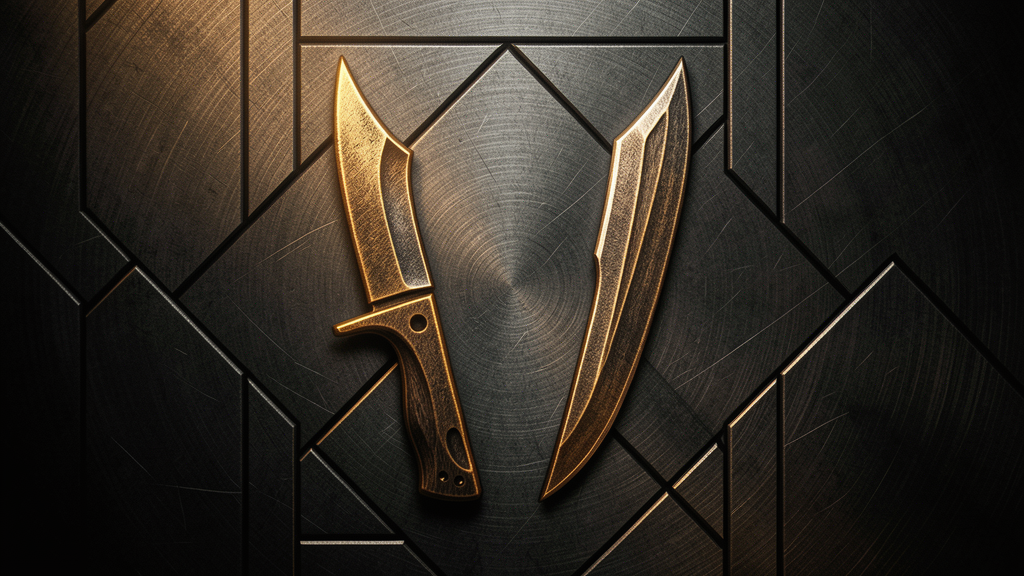
Dagger and tanto blade profiles compared — two distinct geometries for different cutting tasks.
Before diving into the comparison, it's worth noting that both blade shapes serve specific purposes. The dagger traces its roots to ancient edged weapons designed for thrusting in combat, while the tanto originated in Japan as a companion blade to the katana. Both have been adapted extensively into modern folding knives.
Dagger Blade Design and Characteristics
A true dagger blade is symmetrical, with both edges sharpened (double-edged) and a central spine running down the middle. Key features include:
- Double-edged design: Both sides of the blade are sharpened, offering two cutting edges
- Symmetrical profile: The blade is identical on both sides from tip to guard
- Central ridge: A raised spine runs the center length of the blade for structural rigidity
- Needle-sharp point: Designed primarily for thrusting and piercing
- Poor slicing geometry: The symmetrical grind creates more resistance during slicing cuts compared to single-edged blades
In modern folding knives, many "dagger-style" blades are actually single-edged with a false edge on the spine side. This preserves piercing capability while making the knife legal for carry in most jurisdictions that prohibit double-edged blades.
Tanto Blade Design and Characteristics
The tanto blade features a distinctive angular tip created by a high, straight edge that meets a curved or angled belly. Modern interpretations typically feature:
- Single-edged design: One sharpened edge with an unsharpened spine
- Angular tip: A pronounced angled point creating a very strong piercing tip
- Flat grind: Often uses a flat or saber grind for durability
- Strong tip geometry: The reinforced tip resists breaking or rolling under hard use
- Good slicing belly: The curved cutting edge provides good slicing performance on the forward portion
American tanto (also called "modified tanto") is the most common variant in folding knives, featuring a distinct break between the straight edge and the curved belly. Traditional Japanese tanto has a more subtle, curved transition.
Head-to-Head Comparison Table
| Feature | Dagger Blade | Tanto Blade |
|---|---|---|
| Edge Type | Double-edged (typically) | Single-edged |
| Tip Strength | Moderate — thin cross-section | Excellent — reinforced angular tip |
| Piercing Ability | Excellent — symmetrical point | Good — strong tip but wider profile |
| Slicing Performance | Fair — symmetric grind creates drag | Good — curved belly provides clean slicing |
| Legal Friendliness | Low — double-edged banned in many areas | High — standard single-edged carry |
| Best For | Piercing, self-defense, collector pieces | Hard use, piercing tough materials, EDC |
| Sharpening Difficulty | Moderate/hard — two edges to maintain | Easy — single edge with distinct bevels |
EDC Practicality: Which Blade Shape Carries Better?
For everyday carry, the tanto generally wins on practicality. The reinforced tip handles hard-use tasks like scraping, prying light objects, and piercing tough packaging. The single-edge design is legal in more jurisdictions and easier to sharpen with standard sharpening tools.
Dagger blades, while excellent piercers, sacrifice slicing performance due to their symmetrical grind. The double-edged nature also makes them illegal to carry in many states and countries. However, single-edged "dagger-style" folding knives offer a legal compromise that retains the classic aesthetic.
Popular Knives Featuring These Blade Shapes
Many premium knife manufacturers offer tanto and dagger-style blades. Brands like Cold Steel, KA-BAR, and CRKT produce tanto variants known for hard-use durability. Dagger-style blades are more common in tactical and collector-oriented designs from companies like Benchmade, Microtech, and Pro-Tech. Artisan Cutlery's folding knife collection offers several tanto-inspired designs with modern handle materials like titanium, carbon fiber, and Micarta.
Making Your Choice
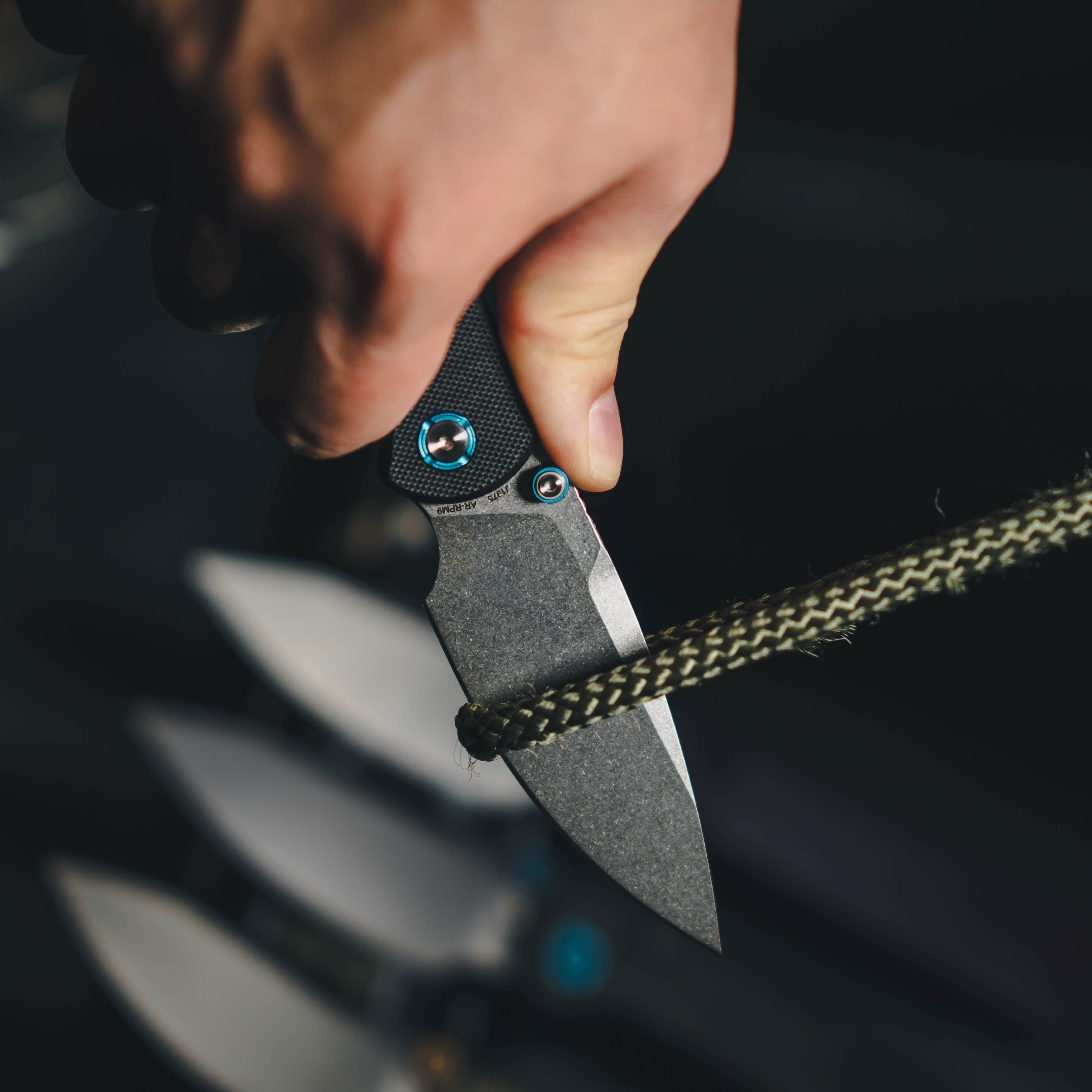
Choose a tanto blade if you need a tough, all-purpose EDC knife that can handle hard-use tasks and is legal to carry everywhere. Choose a dagger-style blade if piercing performance is your priority and you understand your local knife laws. For most everyday carry needs — opening packages, cutting cord, and general utility — a tanto or modified tanto profile provides the best balance of strength and slicing ability.
Understanding your cutting tasks will guide you to the right blade shape. If you frequently cut rope, webbing, or cardboard, the tanto's reinforced tip and slicing belly make it the better everyday choice.


Leave a comment
This site is protected by hCaptcha and the hCaptcha Privacy Policy and Terms of Service apply.