


The way a folding knife opens is one of its most defining characteristics. Flipper tabs, thumb studs, and front flippers each offer a distinct deployment experience, and the choice between them often comes down to personal preference and intended use. Understanding the trade-offs of each mechanism helps you select the right knife for your carry style.

Each opening mechanism offers a different balance of speed, ergonomics, and fidget factor.
Here’s a detailed comparison of the three most common manual opening mechanisms in modern EDC folding knives.
The Flipper Tab: Speed and Satisfaction
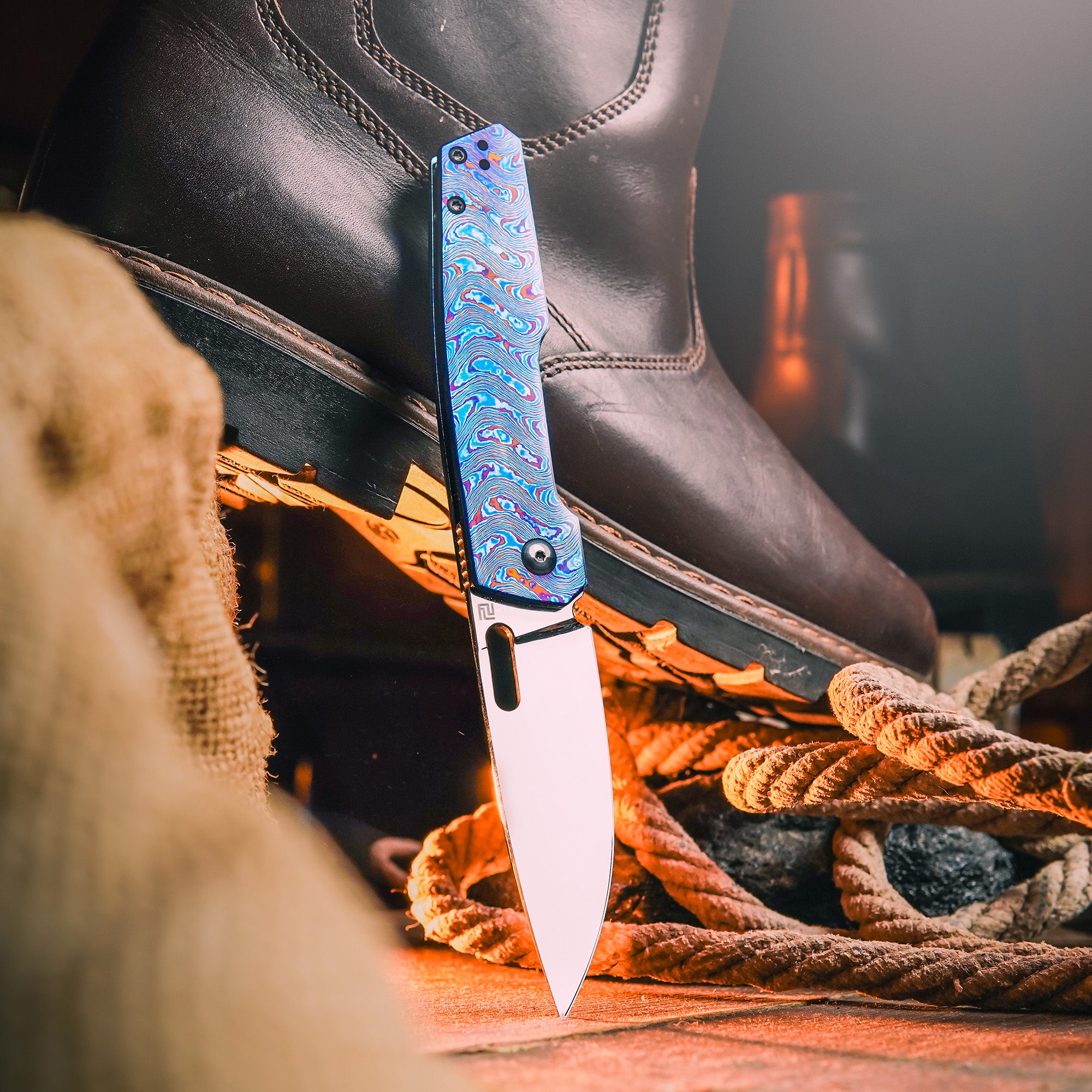
The flipper tab is a protruding tang on the spine of the blade that you pull back with your index finger to deploy the knife. It’s one of the most popular modern opening mechanisms, found on everything from budget EDC knives to premium custom pieces.
Advantages
- Fast deployment — With practice, a flipper can be deployed in a smooth, single motion as you draw the knife from your pocket
- No hand repositioning — Your grip remains unchanged from pocket to cutting position
- Excellent fidget factor — The tactile feedback of a crisp flipper tab is satisfying and addictive
- Ambidextrous — Most flipper knives work equally well for left and right-handed users
- Works with gloves — The protruding tab is easy to operate even with thick gloves on
Disadvantages
- Adds blade length — The flipper tab extends past the handle when closed, increasing overall carry length
- Tuning-dependent — A poorly tuned detent or tight pivot can make a flipper frustrating to use
- Snag risk — The protruding tab can catch on pocket fabric during deployment
- Aesthetic compromise — Some find the tab disrupts the clean lines of the knife
The Thumb Stud: Classic and Reliable
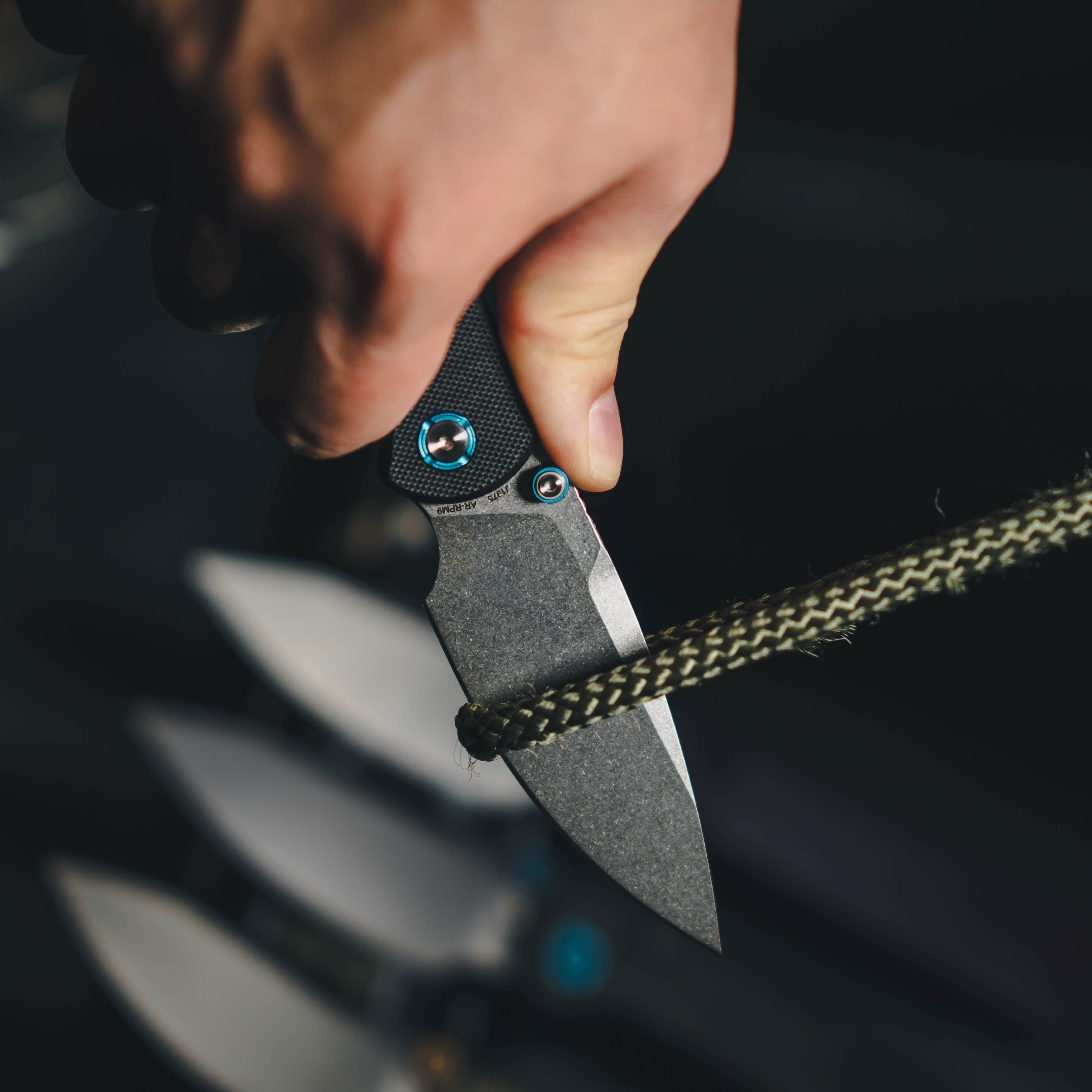
Thumb studs are small posts on either side of the blade near the pivot that you push with your thumb to open the knife. Popularized by custom makers like Chris Reeve, the thumb stud remains a staple of traditional and modern folding knives alike.
Advantages
- Clean profile — No protrusions beyond the handle when closed; a sleeker overall package
- Ambidextrous options — Dual thumb studs or reversible designs work for both hands
- Tactile feedback — Direct thumb-to-blade connection provides precise control over deployment speed
- Less snag risk — Nothing to catch on pocket fabric compared to a flipper tab
Disadvantages
- Requires hand adjustment — You typically need to shift your grip to reach the stud with your thumb
- Not glove-friendly — Thick gloves make it difficult to get purchase on small studs
- Slower than flippers — For most users, thumb stud deployment is slightly slower than a well-tuned flipper
- Stud placement matters — Poorly positioned studs can be awkward or painful to use
The Front Flipper: Elegant and Compact
The front flipper is a tab located on the top of the blade spine at the pivot area. It’s deployed by pressing down on the top of the tab with your index finger. This mechanism has gained popularity in premium knife designs for its clean aesthetics.
Advantages
- Sleekest profile — The tab is hidden or nearly invisible when the knife is closed, maintaining clean lines
- Compact carry — No length added beyond the handle, unlike traditional flippers
- Unique action — The downward pressure motion offers a different tactile experience
- Good for smaller knives — Works well on compact designs where a traditional flipper tab would be impractical
Disadvantages
- Steeper learning curve — Front flippers require more practice to deploy reliably, especially the first few times
- Less leverage — The shorter tab provides less mechanical advantage, requiring a lighter detent
- Not ideal for gloves — The compact tab can be difficult to find and actuate with thick gloves
- Less satisfying snap — The action tends to be more controlled and less dramatic than a traditional flipper
Comparison Table
| Factor | Flipper Tab | Thumb Stud | Front Flipper |
|---|---|---|---|
| Deployment Speed | Fastest | Moderate | Moderate |
| Carry Profile | Longer (tab protrudes) | Clean | Cleanest |
| Glove-Friendly | Excellent | Poor | Fair |
| Learning Curve | Low | Low | Moderate-High |
| Ambidextrous | Yes | Yes (dual studs) | Limited |
| Fidget Factor | High | Moderate | Moderate |
| Snag Risk | Higher | Low | Lowest |
| Common Price Range | $30 - $500+ | $50 - $600+ | $100 - $400+ |
Which Opening Mechanism Is Right for You?
Your choice depends on how you plan to use the knife:
- Choose a flipper tab if you value fast, one-motion deployment, enjoy fidget-friendly action, or need to operate the knife with gloves. Models like the Artisan Cutlery Tomahawk series offer excellent flipper action at a reasonable price point.
- Choose a thumb stud if you prefer a cleaner carry profile, want precise control over deployment speed, or appreciate the classic feel of direct thumb engagement. Thumb studs are a staple of many premium EDC designs.
- Choose a front flipper if you prioritize compact carry, appreciate unique and elegant deployment, or enjoy the challenge of mastering a less common mechanism.
Many collectors end up with knives using all three mechanisms, since each offers a distinctly different carry and deployment experience. Explore the Artisan Cutlery folding knife collection to see examples of flipper and thumb stud designs in action.


Leave a comment
This site is protected by hCaptcha and the hCaptcha Privacy Policy and Terms of Service apply.