



Every part of a folding knife serves a purpose — but many are hidden from view or overlooked by new buyers. Understanding folding knife anatomy helps you evaluate quality, identify what you're paying for, and choose the right knife for your needs. From the tang that locks your blade open to the detent that keeps it closed, this guide breaks down every component of a modern folding pocket knife.

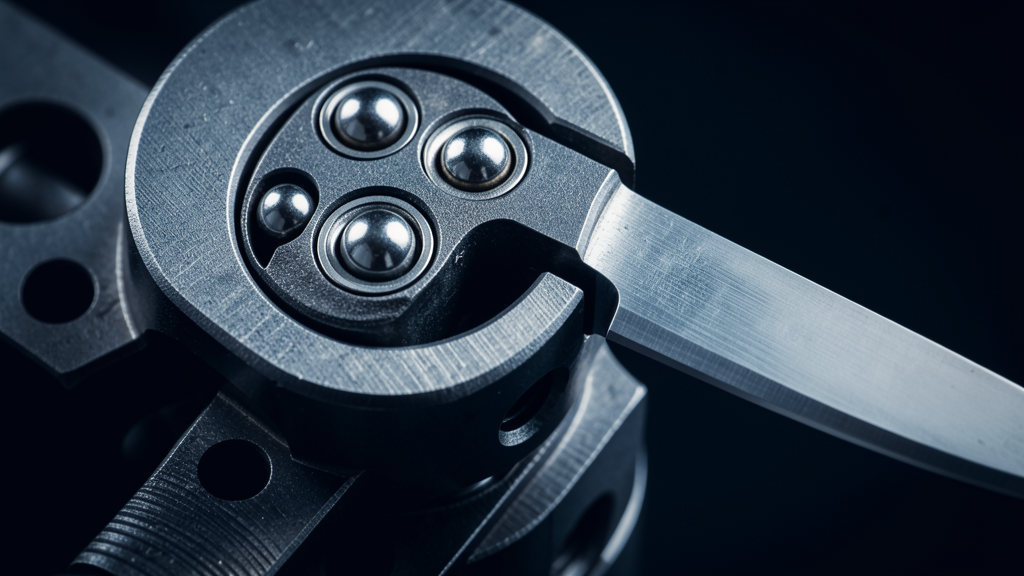
Cross-section diagram of folding knife pivot assembly showing washers and lock bar interaction
The Tang: The Hidden Foundation
The tang is the rear portion of the blade that extends into the handle when closed and engages the locking mechanism when open. Unlike fixed blades (where tang types like full tang vs partial tang matter), folding knife tangs are defined by their profile and lock face geometry.
Tang Key Features
- Lock face — The angled surface on the tang where the lock bar engages. A well-ground lock face creates a secure, rock-free lockup.
- Detent hole — The small divot where the detent ball rests when the blade is closed. Its depth and position determine release effort.
- Pivot hole — The precision-drilled opening that the pivot screw passes through. Must be concentric for smooth action.
- Stop pin contact — The surface that contacts the stop pin when the blade is fully open, preventing over-rotation.
The Choil: Sharpening and Grip Utility
A choil is an unsharpened notch or indentation at the base of the blade edge. It serves two distinct purposes:
- Sharpening choil — A small notch between the edge and the tang that allows you to sharpen the full edge length without grinding into the tang. Essential for maintaining blade geometry through repeated sharpening.
- Finger choil — A larger cutout that allows you to choke up on the blade for detail work, placing your index finger forward of the handle for better control. Not all folding knives include finger choils — they're a design preference.
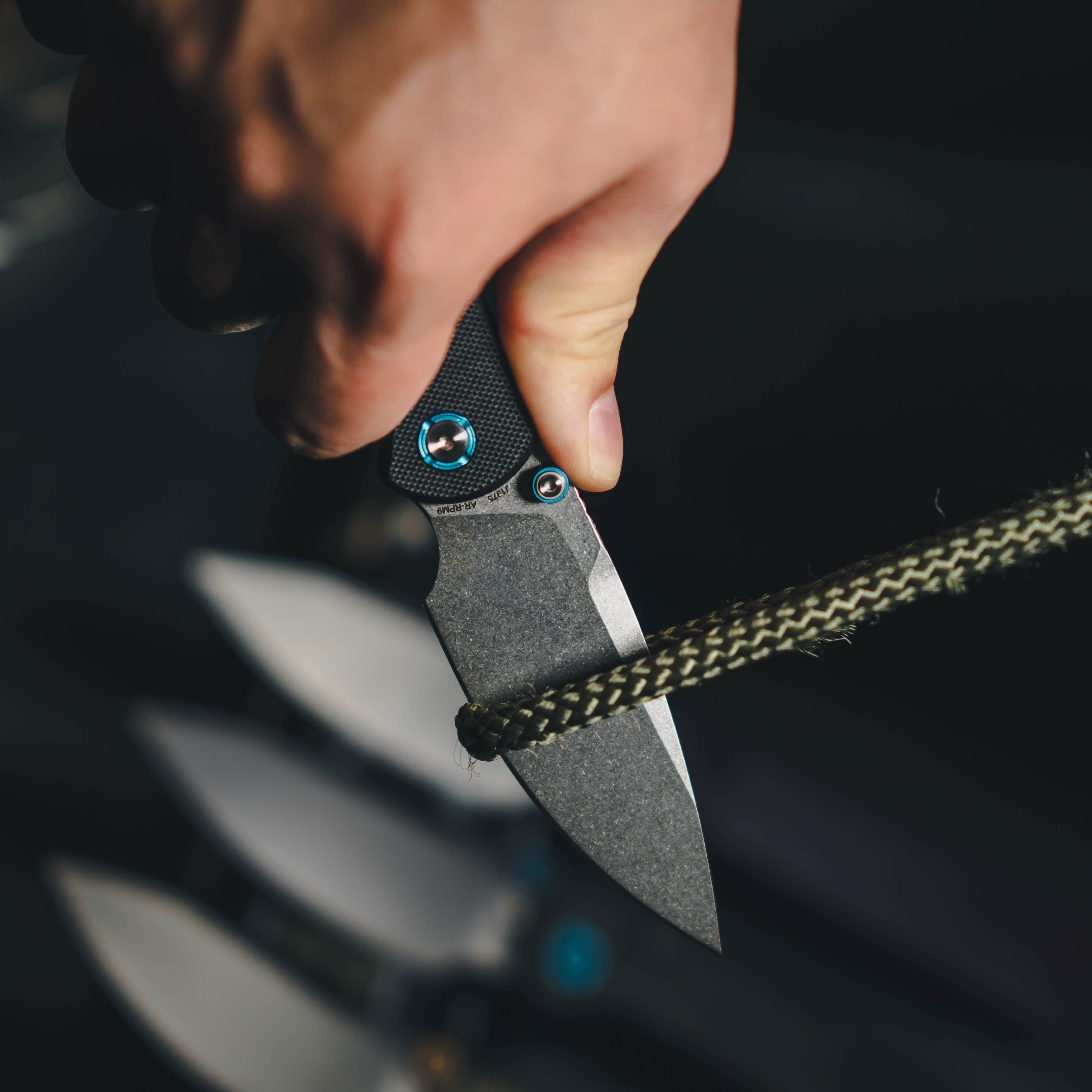
Jimping: Traction Where It Counts
Jimping refers to the machined or cut notches on specific areas of a knife to improve traction. Common jimping locations include:
| Location | Purpose | Common on |
|---|---|---|
| Spine jimping | Thumb traction for precision cutting | Tactical and outdoor knives |
| Flipper tab jimping | Grip for flipper deployment | Flipper knives |
| Handle jimping | Secure grip near the pivot area | Hard-use knives |
| Lock bar jimping | Traction for disengaging the lock | Frame and liner lock knives |
Jimping quality varies widely. Sharp, aggressive jimping provides excellent traction but can be uncomfortable during extended use. Rounded, chamfered jimping is more comfortable but offers less bite. The best jimping strikes a balance — visible texture without abrasiveness.
The Detent System
We covered detent tension in depth in our dedicated guide, but here's the anatomy: The detent system consists of a small bearing ball (typically 1/16" or 1/8" diameter) pressed into the lock bar, and a matching detent hole on the blade tang. When closed, the ball sits in the hole, held by lock bar pressure. Swinging the blade open requires pushing the ball out of the hole — this is the "break" you feel when opening a knife.
- Steel detent ball — Standard, provides consistent engagement
- Ceramic detent ball — Harder, smoother wear characteristics, less friction
- Detent ramp — A slight chamfer leading into the detent hole that guides the ball smoothly
The Pivot: The Knife's Heart
The pivot system holds everything together and determines the quality of the blade's action. A pivot consists of:
Pivot Components
- Pivot screw — Threaded fastener that applies clamping force
- Pivot barrel — Tubular sleeve that the screw passes through, maintaining consistent spacing
- Washers — Bronze, phosphor bronze, or nylon discs between blade and handle that reduce friction
- Bearings — Small metal balls in a cage (IKBS, multi-row) that replace traditional washers for ultra-smooth action
| Pivot Type | Action Feel | Maintenance | Price Tier |
|---|---|---|---|
| Bronze washer | Buttery smooth after break-in | Oil periodically | Budget to mid |
| Phosphor bronze washer | Smooth, minimal break-in | Oil occasionally | Mid to premium |
| Caged bearings (IKBS) | Ultra-smooth, free-spinning | Keep clean, less lubrication needed | Premium |
The Lock Bar and Lock Face
In liner lock and frame lock knives, the lock bar is a flexible piece of steel (liner) or titanium (frame) that springs into position behind the blade tang when the knife opens. The lock face is the contact surface where the lock bar meets the tang.
- Lock bar travel — How far the bar moves across the tang. 50-70% coverage is ideal for strength.
- Lock stick — When the lock bar binds against the tang during disengagement, common on titanium frame locks before break-in.
- Lock rock — Lateral blade play when locked. Indicates poor lock face geometry or worn components.
Putting It All Together: What to Inspect
- Check tang lock face engagement — should be even, 50-70% contact
- Verify choil doesn't interfere with edge geometry during sharpening
- Test jimping — should provide grip without pain
- Feel the detent — should hold blade closed but release cleanly
- Inspect pivot — washers or bearings should be clean, pivot should be adjustable
Understanding these components helps you recognize quality construction. Artisan Cutlery designs each model with careful attention to tang geometry, pivot tuning, and lock face engagement. Explore the Artisan Cutlery folding knife collection to see premium knife anatomy in action.
For more on knife mechanisms, the Pocket Knife entry on Wikipedia provides solid foundational reading, while Knife Steel Nerds covers the metallurgical aspects of blade and component materials.


Leave a comment
This site is protected by hCaptcha and the hCaptcha Privacy Policy and Terms of Service apply.