
Why Blade Shape Matters
The shape of a knife blade determines what it does best. A drop point excels at field dressing game, a tanto pierces tough materials, and a sheepsfoot is ideal for rope cutting and rescue work. Understanding blade geometry and its functional trade-offs helps you choose the right knife for your needs, whether you are outfitting for everyday carry or building a specialized collection at Artisan Cutlery.
Different blade shapes excel at different tasks — drop point for versatility, tanto for toughness, sheepsfoot for safety.
Common Knife Blade Shapes
| Blade Shape | Best For | Key Feature |
|---|---|---|
| Drop Point | General purpose, hunting, EDC | Curved spine drops to the tip for strong point control |
| Clip Point | Slicing, piercing, Bowie-style knives | Concave clip on the spine creates a sharp, narrow tip |
| Tanto | Tactical, piercing hard materials | Angular point with a reinforced tip for high-stress piercing |
| Spear Point | Thrusting, symmetrical cutting | Centered tip with both edges symmetrical |
| Sheepsfoot | Rope cutting, rescue, safety | Straight edge with a blunt, unsharpened curved spine |
| Wharncliffe | Detail carving, box cutting | Straight edge with a straight spine tapering to the tip |
| Reverse Tanto | Modern EDC, tactical folders | Clip point-like tip on a tanto-style belly |
Drop Point: The All-Rounder
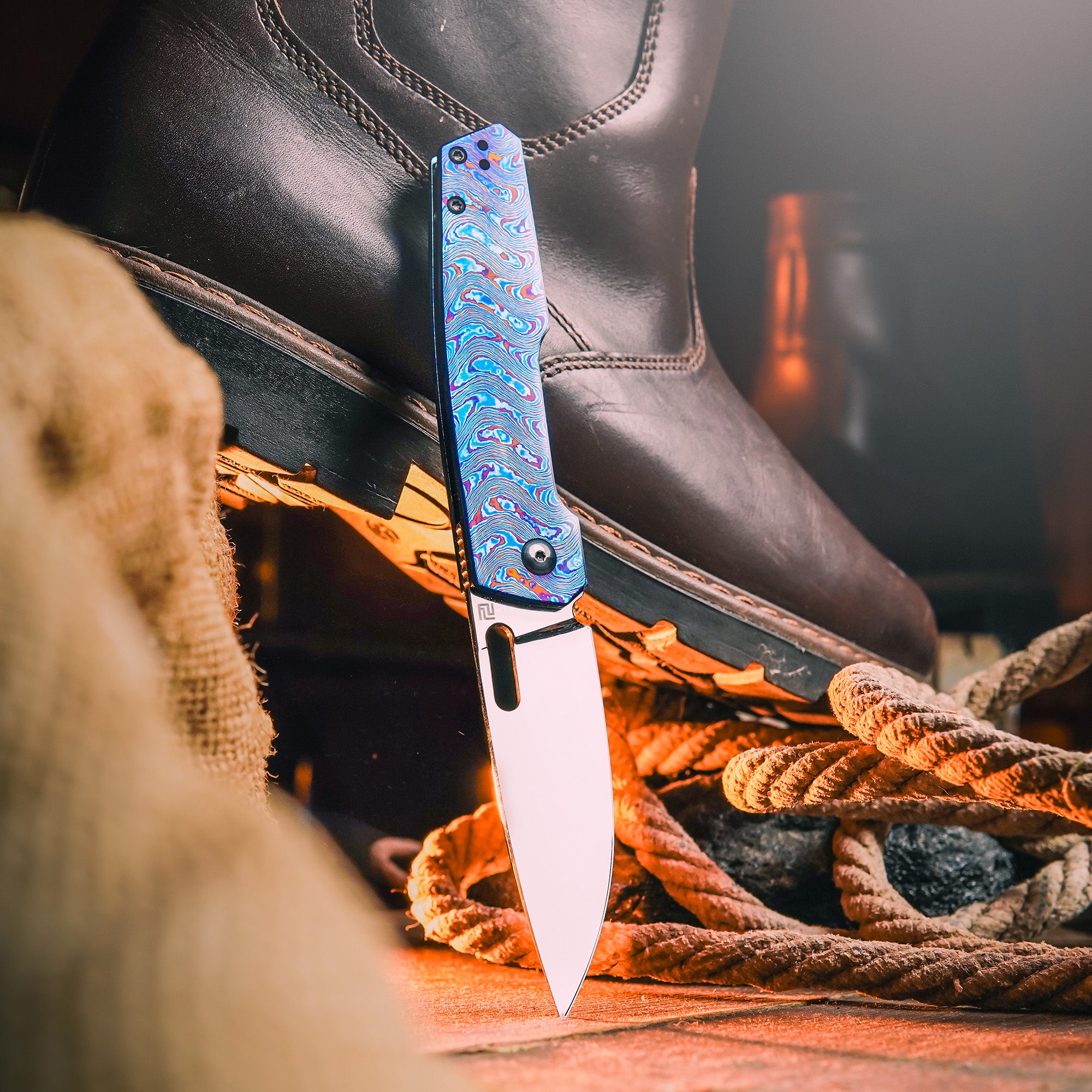
The drop point is the most popular blade shape for everyday carry knives. Its curved spine "drops" toward the tip, placing the point lower and more centered — giving the user excellent control during cutting tasks. The broader belly provides ample slicing surface. This is the default choice for most EDC enthusiasts and the shape most often recommended for first-time buyers.
Clip Point: The Classic Cutter
Made famous by the Bowie knife, the clip point features a concave "clip" cut from the spine near the tip. This creates a very sharp, narrow point ideal for piercing and detail work. The trade-off is a slightly weaker tip compared to a drop point or tanto. Clip point blades excel at slicing and are commonly found on traditional folding knives and hunting knives.
Tanto: Built for Toughness
Inspired by Japanese swords, the tanto blade shape features an angular transition from the main belly to a straight-edged tip section. This creates a reinforced tip that resists breaking during hard-use piercing tasks. Modern tactical folders and military knives often use tanto blades for their strength advantage. The flat grind also makes tanto blades easier to sharpen than curved profiles.
Sheepsfoot and Wharncliffe: Safety Specialists
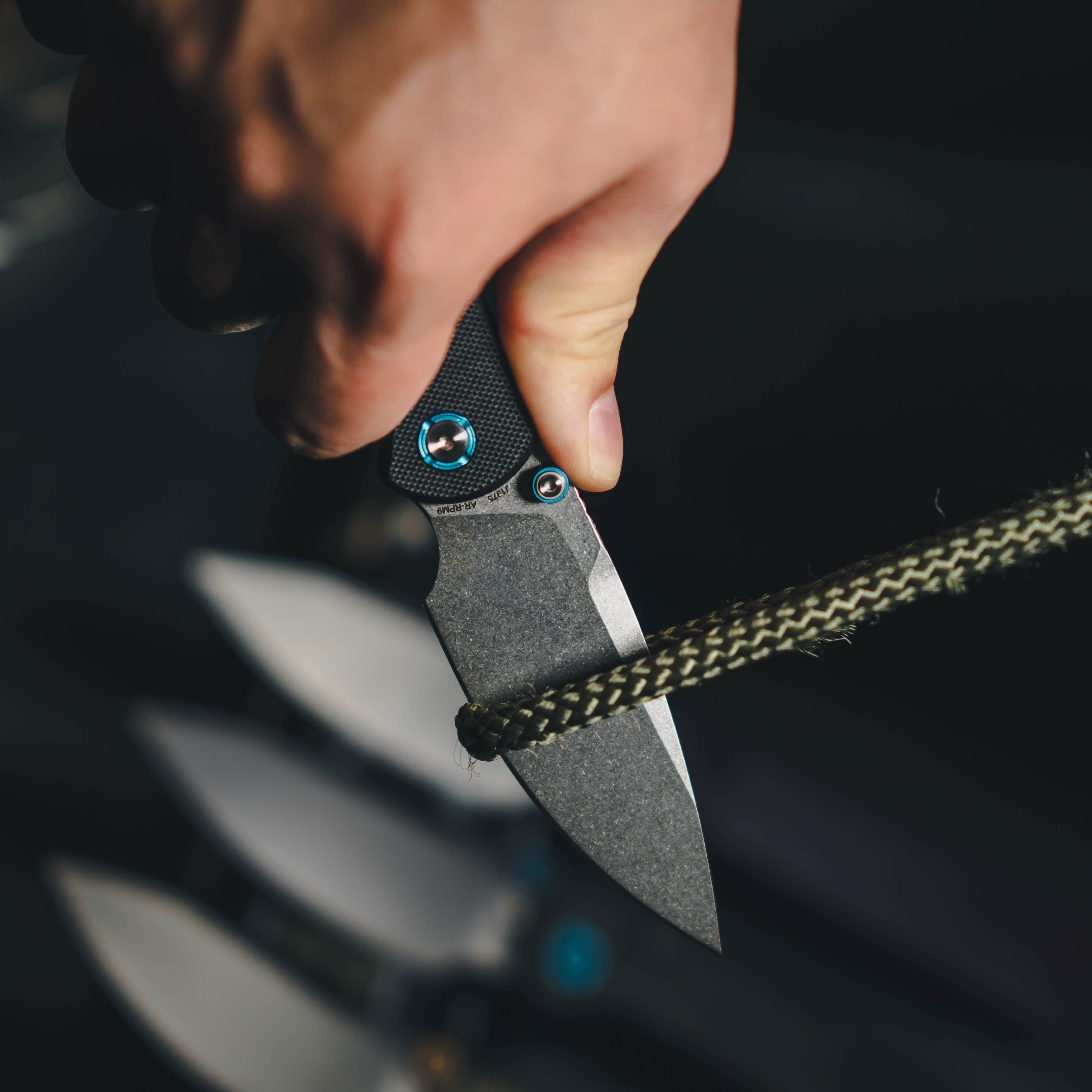
The sheepsfoot blade has a straight cutting edge and an unsharpened curved spine, making it impossible to accidentally point the knife into your hand during cutting. This design is favored by emergency responders, sailors cutting rope, and anyone prioritizing safety. The Wharncliffe is a variation with a straight spine that tapers to the tip, popular among electricians and those doing precision cuts close to a surface.
Choosing Your Blade Shape
- Everyday carry — Drop point or clip point for versatility
- Tactical / hard use — Tanto for tip strength
- Work / utility — Wharncliffe or sheepsfoot for safety and control
- Skinning / hunting — Drop point with ample belly
- Self-defense — Spear point or dagger grind for thrusting

Leave a comment
This site is protected by hCaptcha and the hCaptcha Privacy Policy and Terms of Service apply.