


One of the oldest debates in the knife world is serrated vs plain edge. Both edge styles have passionate defenders, and both have real, measurable strengths. The plain edge is a continuous, smooth cutting surface that excels at precise, clean cuts. The serrated edge is a series of small teeth that bites into tough material like a saw. Choosing between them for everyday carry comes down to what you actually cut — and how often you are willing to sharpen.
Smooth continuous edge against a sawtooth pattern — the core contrast
How Serrations Work
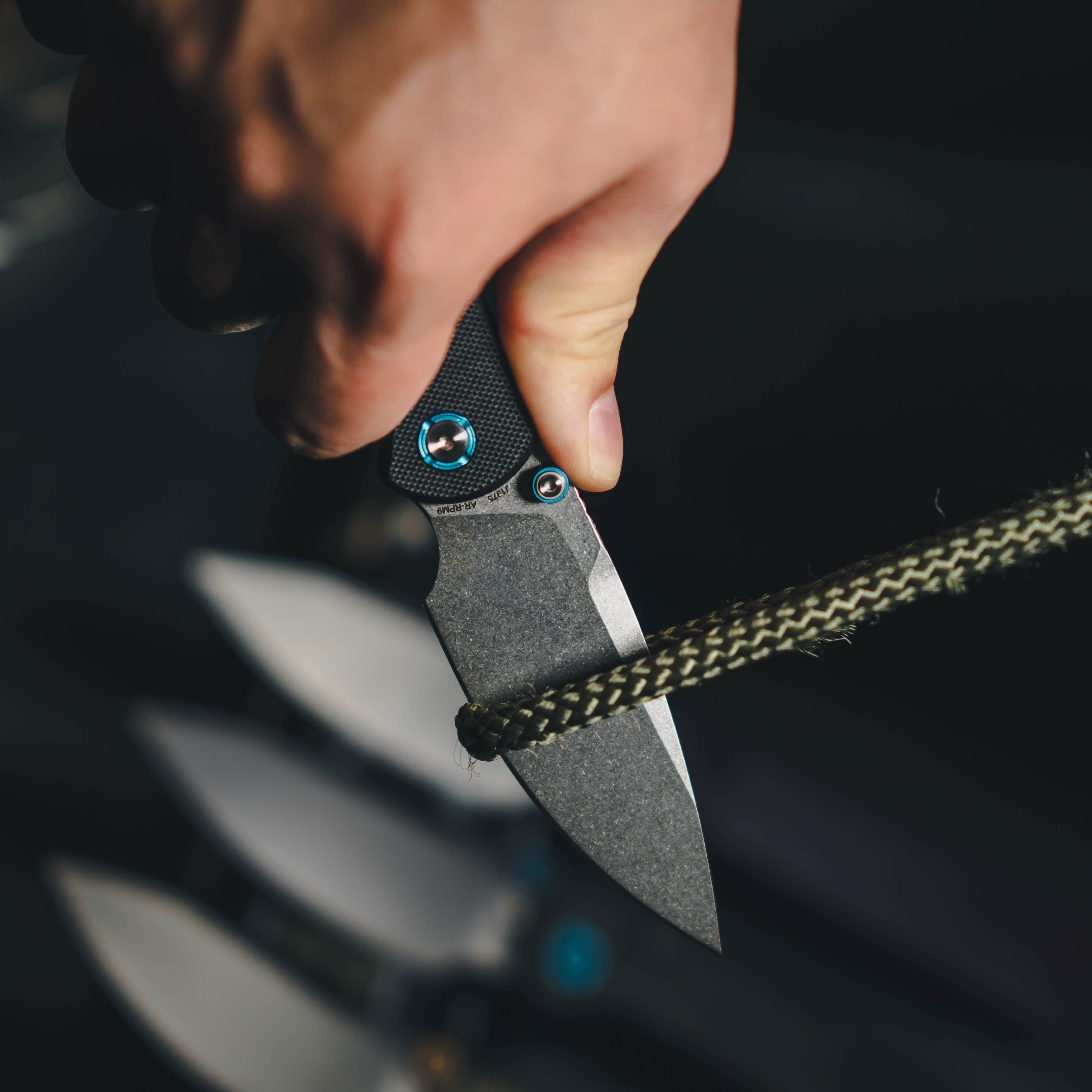
A serrated edge concentrates cutting pressure onto small, curved points, which lets it grab and rip through fibrous material far more effectively than a straight edge of the same length. Rope, webbing, seat belts, cardboard, bread, and plastic straps all yield quickly to a serrated section. The engineering behind these teeth is worth understanding — serration design on Wikipedia covers how tooth geometry and spacing affect cutting performance.
- Excellent on rope, cordage, and webbing
- Bites into tough, fibrous material
- Stays functionally sharp longer between touch-ups
What Plain Edges Do Best
A plain edge is the master of control. It gives you a continuous cutting surface for clean slices, precise trimming, food prep, and push cuts — anything where accuracy matters more than brute force. A plain edge is also dramatically easier to sharpen: a flat stone or strop glides along the whole edge in a few minutes, whereas serrations require a tapered sharpening rod and patience to reach the valleys between teeth.
- Precise, clean cuts on most everyday tasks
- Easy to maintain with stones and strops
- Superior for push cuts and detailed work
Serrated vs Plain Edge: Side-by-Side
| Factor | Plain Edge | Serrated Edge |
|---|---|---|
| Cardboard and paper | Good | Very good |
| Rope, webbing, straps | Fair | Excellent |
| Food preparation | Excellent | Poor |
| Precision and control | Excellent | Fair |
| Ease of sharpening | High | Low |
| Time between touch-ups | Shorter | Longer |
Choosing for Your Carry
For most everyday carry scenarios, a plain edge is the better default. Boxes, packaging, food, and general utility work all favor a clean, easily maintained edge, and a dull plain edge is far simpler to restore than a dull serrated one. Choose a serrated or partially serrated blade if your day is full of rope, straps, or heavy fibrous material — delivery work, outdoor activity, boating, and similar use cases genuinely benefit from the teeth.
A partial serration — a short serrated section near the base with a plain edge along the rest of the blade — is the classic compromise. It gives you the rope-cutting bite where it matters most while keeping a long plain section for precise work. If you can carry only one knife and your cutting diet is mixed, that hybrid layout is often the most practical answer to the serrated vs plain edge question.
The Verdict
There is no single winner — there is only the right edge for your cutting load. Plain edge for control, precision, and easy maintenance; serrated for aggressive work on tough, fibrous materials; partial serration for a balanced everyday compromise. Match the edge to the job, and you will get more use out of your knife than any theoretical debate can deliver.
Pair the right edge with the right handle — explore the Artisan Cutlery folding knife collection for everyday blades built for reliable everyday carry.

Leave a comment
This site is protected by hCaptcha and the hCaptcha Privacy Policy and Terms of Service apply.