

A Brief History of the Dagger
The dagger is one of humanity's oldest blade designs, with archaeological evidence dating back to the Bronze Age. Originally conceived as a thrusting weapon, the dagger's defining characteristic has always been its symmetrical, double-edged blade design. Over centuries, this silhouette evolved across cultures into distinct forms, from the slender stiletto of Renaissance Italy to the broad Scottish dirk. Today, the dagger's visual DNA can be found in modern EDC pocket knives, adapted for practical everyday carry while retaining the iconic symmetrical profile that defines the category.

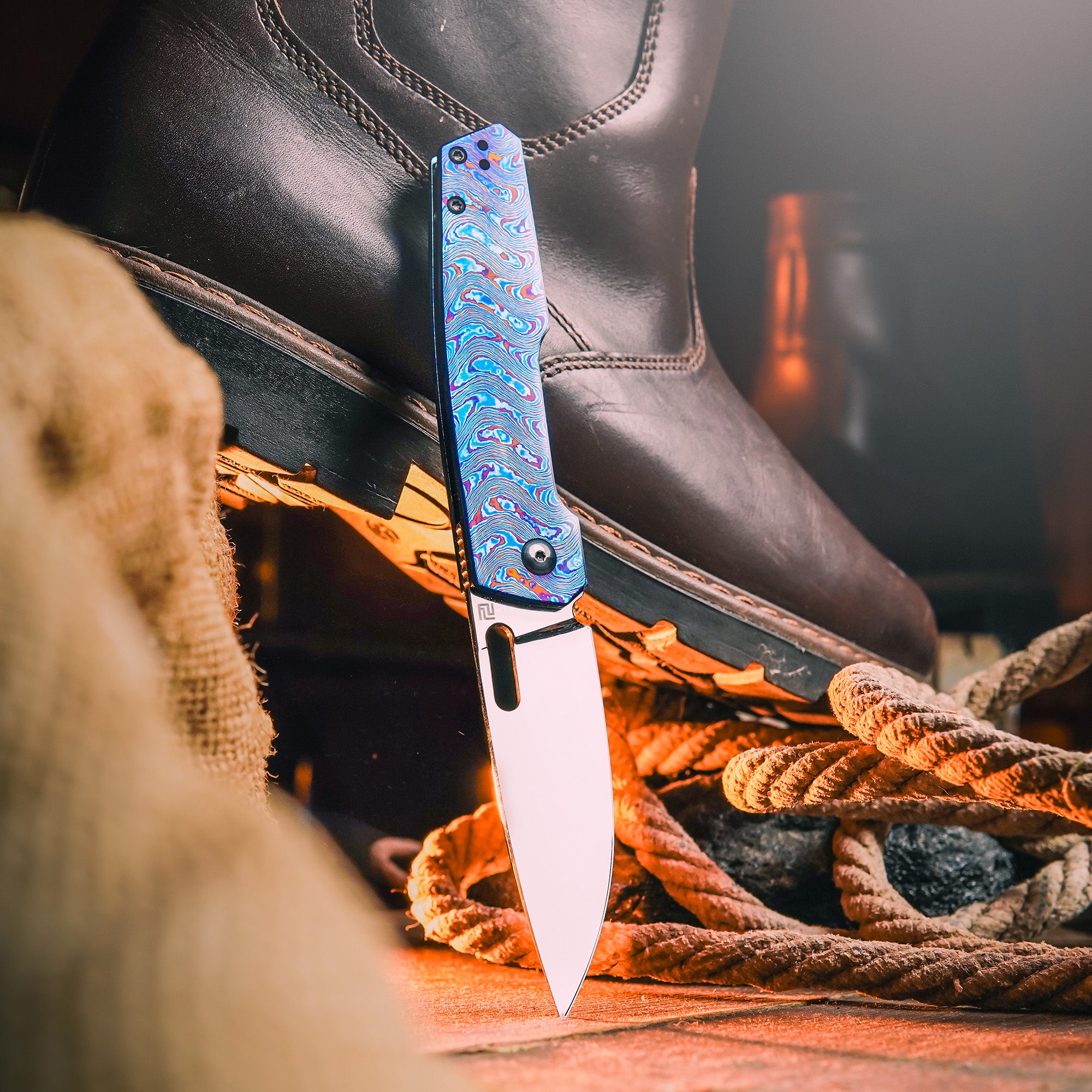
The iconic symmetrical silhouette of dagger blades has evolved across centuries into modern EDC folding knife designs.
Understanding the types of daggers throughout history helps collectors and EDC enthusiasts appreciate how historical designs influence contemporary folding knife interpretations.
Major Historical Dagger Types
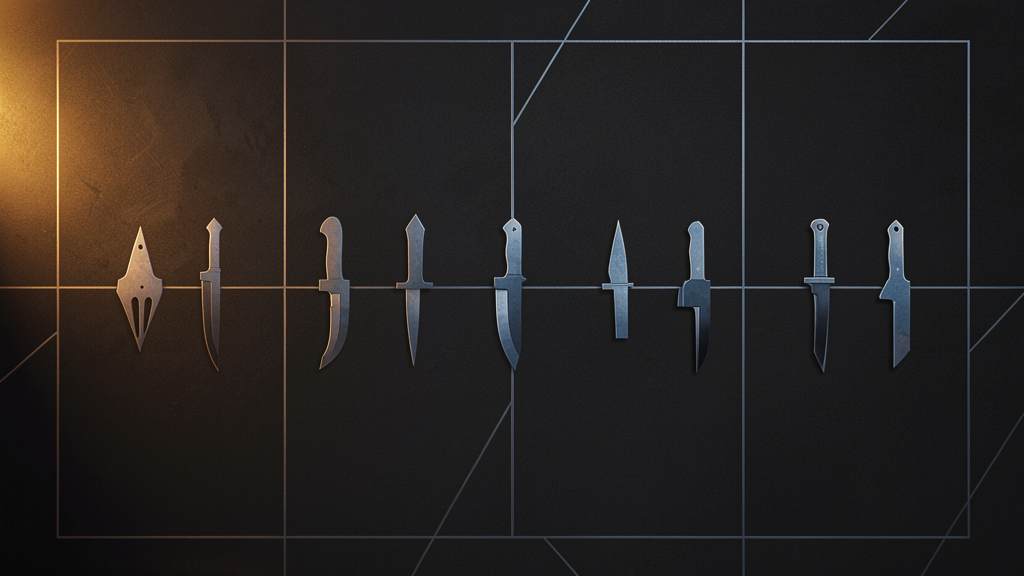
While dozens of regional variations exist, most historical daggers fall into a few major categories, each with distinct design features:
| Dagger Type | Era | Key Features | Blade Profile |
|---|---|---|---|
| Rondel Dagger | 14th–16th Century | Disc-shaped guard and pommel, stiff triangular blade | Narrow, rigid, needle-point |
| Stiletto | 15th–17th Century | Slender, needle-like blade, no cutting edge | Very narrow, acute point |
| Bollock Dagger | 13th–16th Century | Lobed guard resembling anatomical form | Broad leaf-shaped blade |
| Main-Gauche | 16th–17th Century | Parrying dagger used with rapier, complex guard | Wide base, tapering sharply |
| Dirk | 17th–19th Century | Scottish Highland, long blade, decorative handle | Straight, tapering, single or double edge |
| Bowie Knife | 19th Century | Large clip-point blade, crossguard | Clip point, false edge, heavy spine |
How Historical Designs Translate to Modern EDC
Modern folding knife manufacturers frequently draw inspiration from historical dagger types when crafting EDC-friendly interpretations. The stiletto's slender profile, for instance, reappears in modern slim carry knives optimized for deep pocket clip carry. The dirk's substantial presence influences larger modern tactical folder designs. The key adaptation is the shift from a purely thrusting weapon to a multi-purpose cutting tool — and with that comes the shift to a single edge, for both legal compliance in carry and practical slicing utility.
Today's folding dagger interpretations typically feature:
- Symmetrical blade shape — retaining the aesthetic balance of traditional daggers
- Single-edge grind — for practical cutting performance in daily tasks
- Modern locking mechanisms — frame locks, liner locks, and button locks for safe one-handed use
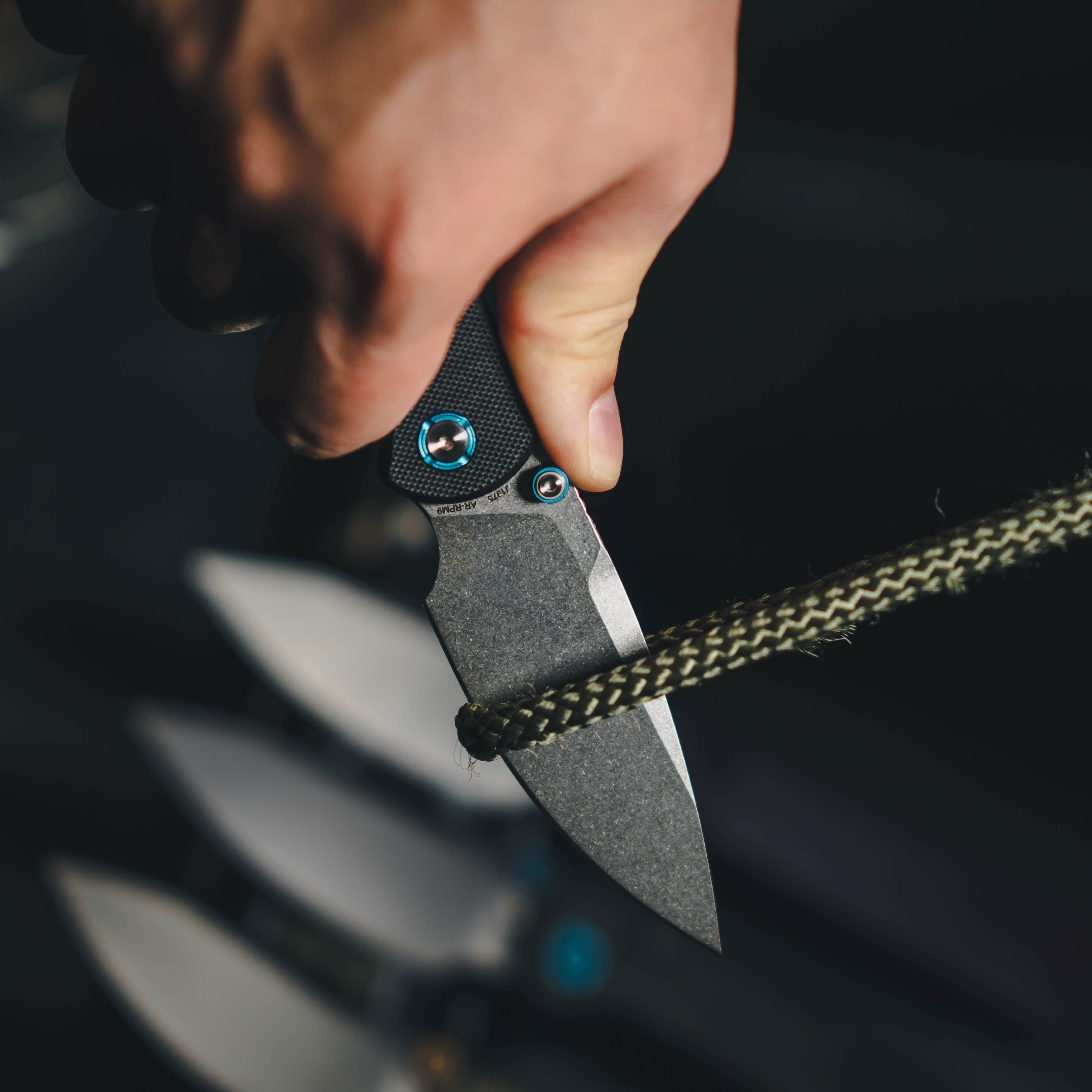
- Premium blade steels — S35VN, M390, and AR-RPM9 bringing modern metallurgy to classic forms
- Ergonomic handle materials — titanium, G10, carbon fiber, and micarta replacing wood and bone
Artisan Cutlery's folding knife lineup includes several designs that echo classic dagger proportions while delivering modern EDC performance. Browse the Artisan Cutlery folding pocket knife collection for contemporary takes on timeless blade silhouettes.
Legal Considerations for Dagger-Style EDC Knives
One of the most important distinctions when carrying a dagger-inspired folding knife is understanding local knife laws. While folding knives with single-edge blades are legal in most jurisdictions, the definition of a "dagger" varies significantly by state and country. Many regions define a dagger as any knife with a double-edged blade designed for stabbing — which means most modern folding dagger interpretations with single-edge grinds do not meet this legal definition. However, always check local regulations before carrying any knife. Resources like knife legislation on Wikipedia provide general context, but local ordinances take precedence.
Why Dagger Designs Appeal to Modern Collectors
Beyond practicality, dagger-style folding knives carry aesthetic appeal rooted in centuries of blade craft. The symmetrical lines, the dramatic taper, and the visual balance of a well-executed dagger profile resonate with collectors who appreciate the intersection of history and engineering. Limited-edition dagger folder runs from manufacturers like Artisan Cutlery, WE Knife, and Kizer frequently sell out quickly, reflecting sustained collector interest in this blade shape.
Whether you are a history enthusiast, a knife collector, or someone seeking a distinctive EDC blade profile, understanding the types of daggers and their evolution enriches your appreciation of modern folding knife design.

Leave a comment
This site is protected by hCaptcha and the hCaptcha Privacy Policy and Terms of Service apply.