

Short answer: cardboard is abrasive. The paper itself is loaded with mineral filler, recycled fiber brings in grit, and the glue lines add a hard, gummy edge that the blade has to push through. A knife doesn't go dull from cutting boxes so much as from grinding along a sheet of very fine sandpaper — which is why a box-cutter session can kill an edge that survived a month of rope and packaging tape.
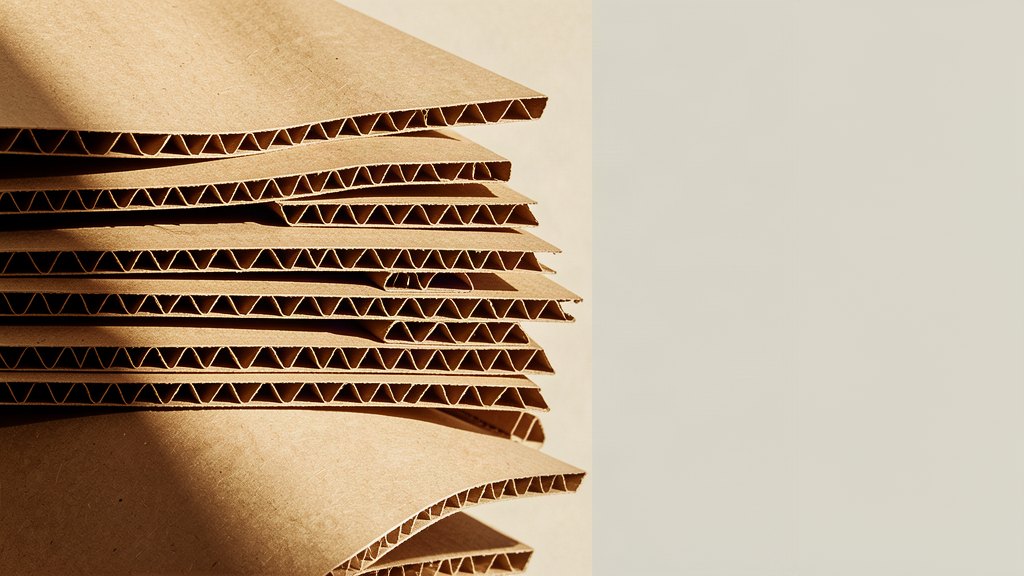
Corrugated board is a layered abrasive, not soft paper.
That explains the thing most people notice and few can explain: the knife still shaves arm hair, but it snags and tears on the next box. Cardboard doesn't roll an edge the way soft food does. It wears the apex down, and it does it fast, because the material is designed to be stiff and cheap rather than kind to steel.
What's Actually in a Cardboard Box
A corrugated box is two flat liner sheets with a fluted layer glued between them. The liner is paper made from wood fiber, and papermaking routinely adds mineral fillers — clay and calcium carbonate among them — to control opacity, stiffness, and printability. Recycled liner carries whatever came in with the recovered fiber: sand, dust, small grit, dried adhesive.
So when you drag a blade through a box, the edge is not just slicing fiber. It is passing through a thin, slightly gritty composite that includes hard mineral particles and starch adhesive. Three failure modes follow:
- Abrasive wear at the apex. The very tip of the edge is a few microns wide. Mineral grit scrubs it away, so the edge rounds gradually rather than failing suddenly.
- Micro-chipping on staples and tape. Staples, plastic strapping, and dried glue blobs are hard, localized loads. A very hard, thin edge chips instead of deforming.
- Side loading from bad technique. Twisting the blade to widen a cut puts lateral force on an edge that was designed for linear slicing. That is how edges bend and how tips snap.
Why a Polished Edge Is the Wrong Edge for Cardboard
Sharpening advice built for shaving favors a polished apex. Cardboard punishes it. A highly polished edge has a smooth, uniform apex, and smooth apexes slide on fibrous material: the fibers bend away instead of being severed, so you press harder, which accelerates wear and increases the chance of slipping.
A coarser finish leaves microscopic teeth along the apex. Those teeth catch individual fibers and start the cut instead of skating over them. Knife Steel Nerds has measured this directly in his work on sharpness versus cutting ability: a toothy edge can outperform a polished one on fibrous material even when the polished edge measures "sharper" by conventional tests. The grit numbers to remember are roughly 320 to 600 for a working cardboard edge. That is coarse by hobbyist standards and right for the job.
Blade Geometry: Thin Cuts, Fat Binds
Grind and stock thickness matter as much as the apex. A box is a stack of layers, and a thick blade has to wedge all of them apart. A thin blade behind the edge separates them with far less force, which means less pressure, less heat, and less wear per cut.
| Blade trait | Effect on cardboard | Trade-off |
|---|---|---|
| Thin stock, thin behind the edge | Slices with little resistance, tracks straight | Less tolerant of twisting and prying |
| Full flat grind | Gradual taper, good all-around slicing | Thicker shoulders on heavy stock bind sooner |
| High hollow grind | Very keen near the edge, fast in shallow cuts | Thin edge heats and wears quickly |
| Scandi or thick saber grind | Durable, strong tip | Wedges in deep cuts, more effort per box |
| Coarse 320–600 finish | Bites fiber, keeps cutting longer | Feels rough on paper and on skin |
| Polished 3000+ finish | Very keen in soft material | Slides on fiber, dulls faster in cardboard |
Blade shape follows the same logic. A drop point or a sheepsfoot with a straight cutting edge slices a long, controlled draw. A deeply curved belly forces you to change angle mid-cut, and a needle tip invites you to use the point where a slice would work better. For volume work, a utility blade with a replaceable 0.6 mm segment beats any folding knife on cost per box — that is the honest recommendation.
Technique: Cut, Don't Crush
Most edge damage in a cardboard session is technique, not material. Five habits make the difference:
- Slice, don't push. Start the cut with a short draw near the heel, then pull through while keeping the edge in contact. A long draw uses more of the edge and needs less force per inch.
- Break the box down flat first. Cut the tape seam, open the flaps, flatten the box, then cut the panels. Cutting a sealed three-dimensional box means sawing through two layers plus a void.
- Never cut on concrete, brick, or glass. The instant the apex touches the surface underneath, you have sharpened your knife on a rock. Cut in the air, on a wooden board, or on a piece of scrap cardboard.
- Keep the blade at a shallow angle to the surface. Around 20 to 30 degrees off the plane of the cardboard lets the edge slice into the fiber rather than diving at it.
- Stop twisting. If the cut is binding, back out and re-enter. Twisting is how thin edges bend and how tips snap inside a box.
Two hazards deserve their own line. Staples hide under tape and along the seams of heavy shipping cartons; a staple will chip a hard edge in one stroke. And tape residue is mildly adhesive — it collects grit and holds it against the blade, which is why a knife that has been cutting taped boxes feels gritty at the pivot after a while.
Which Knife for Which Job
Not every cardboard task deserves your good folder. A simple split:
- One or two boxes: any sharp folder, sliced properly, is fine. This is the everyday case and the reason a pocket knife exists.
- A move, a delivery, a recycling run: a retractable utility knife. Ten boxes will take the bite off a folder edge; a utility blade costs cents to replace and takes the abuse without complaint.
- Thick double-wall or pallet cartons: a fixed blade with a thin grind or a heavy-duty utility knife. Depth of cut and leverage matter more than finesse.
- Tape, strapping, shrink wrap: a serrated edge, which grabs plastic film and cuts it in one pull instead of sliding. The serrated versus plain comparison covers the trade-offs.
Steel Choice for Abrasive Work
Cardboard rewards wear resistance more than toughness. Steels with a high volume of hard vanadium carbides — S90V, M390, 20CV — resist abrasive wear noticeably longer in this kind of work, which is exactly the property that makes them expensive and slow to sharpen. Tougher, simpler stainless like 14C28N or 12C27 wears faster but shrugs off staples and accidental drops with less micro-chipping, and it comes back on a stone in a fraction of the time.
Middle-ground tool steels like D2 sit between the two: good abrasive resistance, decent toughness, and a reputation for holding a coarse working edge. If cardboard is a large part of your week, the practical answer is usually not a different steel but a different tool for the bulk of it — then keep the folder sharp for the cuts that need control. Our steel guide collection is organized by exactly this question.
What matters less than most people expect is hardness alone. A 62 HRC edge made of a low-carbide steel still wears in cardboard. A 59 HRC edge packed with vanadium carbides keeps cutting. Composition decides abrasive wear; hardness mostly decides how the edge fails.
Keeping the Edge Between Sessions
Cardboard dulls an edge by rounding it, so the fastest fix is not a full sharpening — it is a strop. Ten light passes on loaded leather at the bevel angle restores most of the bite after a box session, and it takes less than a minute. That single habit will keep a working knife cutting for weeks without touching a stone.
When stropping stops working, the sequence is simple:
- Clean the blade. Isopropyl alcohol on a cloth lifts tape adhesive; hot water and dish soap can stain or warp some handle materials and is rarely worth it.
- Light strop first. If the edge bites a fingernail after ten passes, you are done.
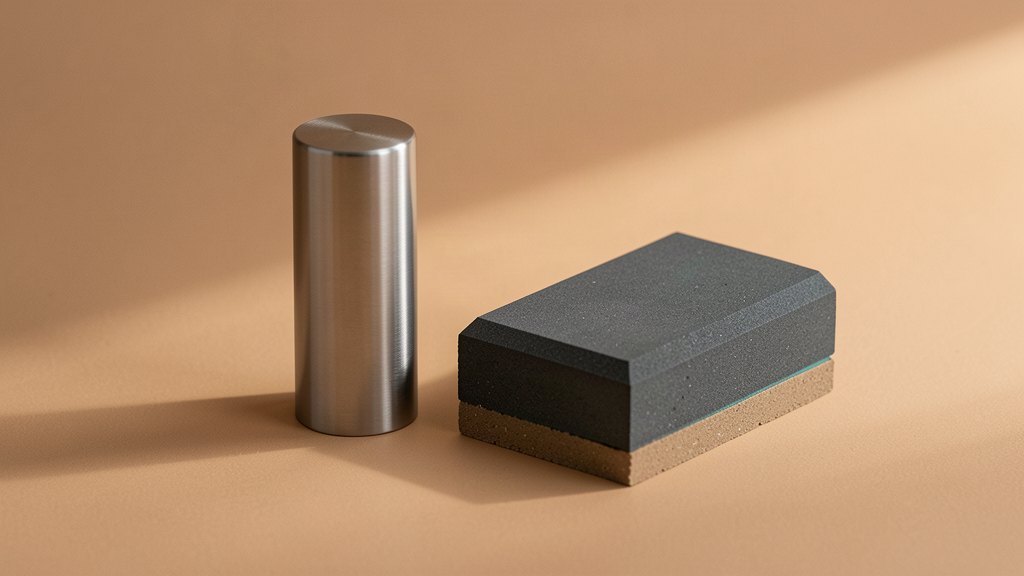
- Then a 600-grit stone. A few passes per side at the existing angle, then a light pass to remove the burr. Do not jump to a fine stone — you will polish away the teeth that make the knife work in cardboard.
- Check the apex under light. A bright reflection means the edge is still rounded; keep going at low pressure.
The same routine keeps a utility blade in service longer than people expect, though at a dollar or two per blade, replacing it is often the better use of time.
Safety, Because Dull Knives Slip
A dull knife needs force, and force plus a slipping blade is how hands get cut. Two rules cover almost every cardboard injury: cut away from your body with the free hand behind the blade, and never pull a blade toward the hand that is holding the box. Gloves help on heavy double-wall stock, where the folded edges are stiff enough to catch a knuckle.
If you are cutting a lot of boxes, sit or stand so the cut runs across your body rather than toward it, keep the box braced against a surface instead of your leg, and change blades or sharpen before the knife starts requiring a second hand on the spine. Effort is the signal.
The Short Version
Cardboard is an abrasive composite, not soft paper, and it rounds an apex instead of rolling it. A toothy edge at 320 to 600 grit with a thin grind cuts best and lasts longest; a polished edge slides and wears. Break boxes down flat, slice instead of pushing, never cut on concrete, and expect staples to be where the damage happens. Strop after the session, sharpen on a coarse stone when stropping stops working, and keep a utility knife for the bulk work so the folding knife stays sharp for the cuts that actually need it. A fixed blade is the better answer for a full move, and a cheap retractable cutter is the better answer for a warehouse.

Leave a comment
This site is protected by hCaptcha and the hCaptcha Privacy Policy and Terms of Service apply.