

A damascus pocket knife is almost never sold as simply “damascus”. The listing names a pattern — ladder, twist, raindrop, random, mosaic — and that name is not decoration. It describes how the billet was folded, cut, twisted or ground before the blade was polished and etched. Understanding the six patterns you will actually see is the fastest way to read a damascus listing, compare two blades honestly, and know what you are paying for.
Pattern is a record of process: the acid etch only reveals the layers the billet already contains.
How a Pattern Gets Into the Steel
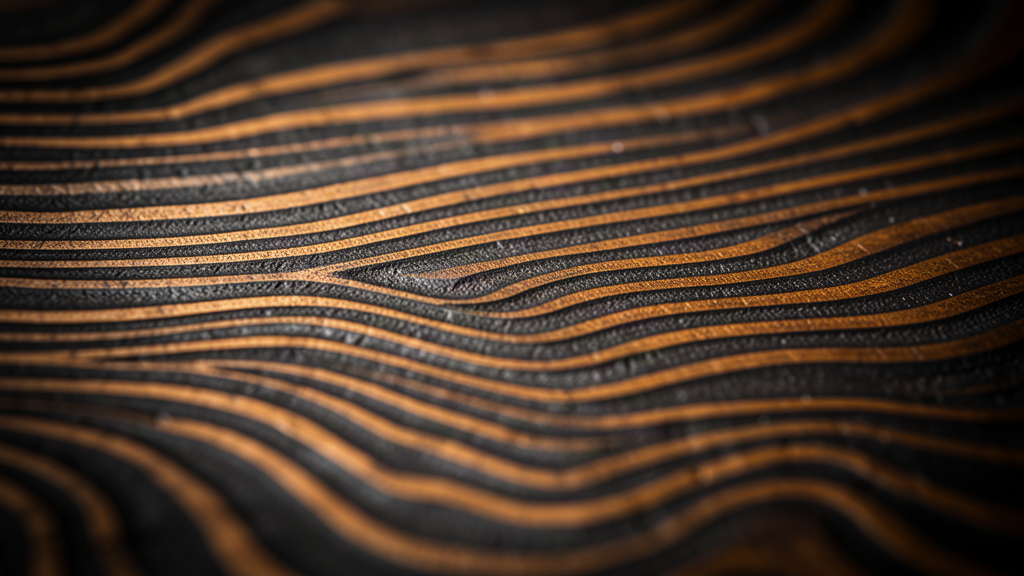
Modern knife damascus is pattern-welded steel: two or more steels with different alloy content are stacked, forge-welded into a single billet, then drawn out and folded, cut and restacked, twisted, punched or ground until the layers multiply into the dozens or hundreds. The figure becomes visible only at the end, when the finished blade is polished and dipped in acid. The two steels resist the acid at different rates, so one layer turns dark and the other stays bright — that contrast is the pattern.
The historical material behind the word is different. The original “Damascus” reputation belongs to wootz steel, a crucible steel made in India and Sri Lanka and traded through Damascus, described in the history of Damascus steel. It was never pattern-welded from a stack. When a knife listing says damascus today, it means pattern welding.
The Six Patterns You Will Actually See
| Pattern | How the figure is produced | What it looks like on the blade |
|---|---|---|
| Ladder | The welded billet is ground with a series of parallel grooves across its width before the final flattening. | Regular rungs of contrasting steel that ladder up the blade. The most “engineered” looking of the simple patterns. |
| Twist | The stacked billet is drawn out and twisted about its own axis, then forged flat again. | Bars of light and dark steel that spiral or chevron along the blade. Movement is the point. |
| Raindrop | The billet is punched or drilled from the side and then ground flat, dragging the layers into circles. | Teardrops and ovals scattered across the surface, often tightly packed. |
| Random | No controlled manipulation after the initial fold and restack cycle — only the natural drift of the layers. | Irregular, organic banding. Reads as wood grain more than geometry. |
| Mosaic (canister) | Small rods or shaped pieces of contrasting steel are packed into a canister with powder, welded and drawn out. | A constructed motif rather than a line pattern. The most labour-intensive and the most expensive. |
| San mai / clad | Not pattern welding at all: a hard core is sandwiched between softer cladding. | A single visible line between cladding and core, and a bright cutting edge. |
The pattern is a record of process, not a grade. A clean ladder and a clean raindrop can come from the same two steels and behave identically in use.
What a Pattern Name Does Not Tell You
- Layer count. A 300-layer billet is not automatically better than a 60-layer one. Above a certain count the layers are too thin to see, so extra folding buys nothing but labour.
- Which steels went in. Pattern requires contrast, and contrast usually means at least one high-carbon layer. That is why pattern-welded blades tend to be less corrosion-resistant than a single stainless blade.
- Hardness. HRC is set by the steel and the heat treatment, not the figure. If a listing does not publish a hardness window, that is the number to ask for — our guide to what HRC means for EDC explains the trade-off.
- Whether the figure is genuine. Laser-etched and printed imitations copy the look of ladder and raindrop without any welding. Real vs fake damascus covers the tells.
Pattern, Etching and Care
The acid etch that reveals the pattern is also the surface you have to maintain. Etching is controlled corrosion (what etching does to metal), and the carbon-rich layers that give the pattern its darkness are the same layers that will spot first. Wipe the blade after use, keep it dry, and oil it before storage. Heavy abrasion — grinding compounds, aggressive polishing — will flatten the etch and the figure will fade toward a plain grey; a light re-etch restores it. The step-by-step routine is in our damascus maintenance guide.
Damascus in the Artisan Cutlery and CJRB Range
Both brands pattern-weld their damascus blades and pair them with titanium, G10, micarta, carbon fibre or wood handles. Prices and stock below were read from the live storefront listings while writing this guide.
| Model | Handle | Price | Status |
|---|---|---|---|
| CJRB Pyrite-Light J1945 Damascus | FRN | $69.99 | In stock |
| CJRB Crag J1904 Rose Damascus | Carbon fibre | $89.99 | In stock |
| CJRB Feldspar J1912 Damascus (button lock) | Steel | $89.99 | In stock |
| CJRB Pyrite J1925 Damascus | Titanium | $139.99 | Grey and green in stock |
| Artisan Cutlery Osprey ATZ-1803GD | Titanium TC4 | $187.49 | In stock |
| Artisan Cutlery Orthodox ATZ-1817GSD | Titanium | $171.74 | In stock |
| Artisan Cutlery Hyperion ATZ-1834GSD | Titanium + carbon fibre | $183.30 | Blue, grey and green in stock |
| Artisan Cutlery Eterno ATZ-1818GD | Titanium | $199.49 | In stock |
| Artisan Cutlery Centauri ATZ-1839GD | Micarta + titanium | $199.99 | In stock |
| Artisan Cutlery Classic ATZ-1802GD | G10 | $149.99 | Colourways showing sold out |
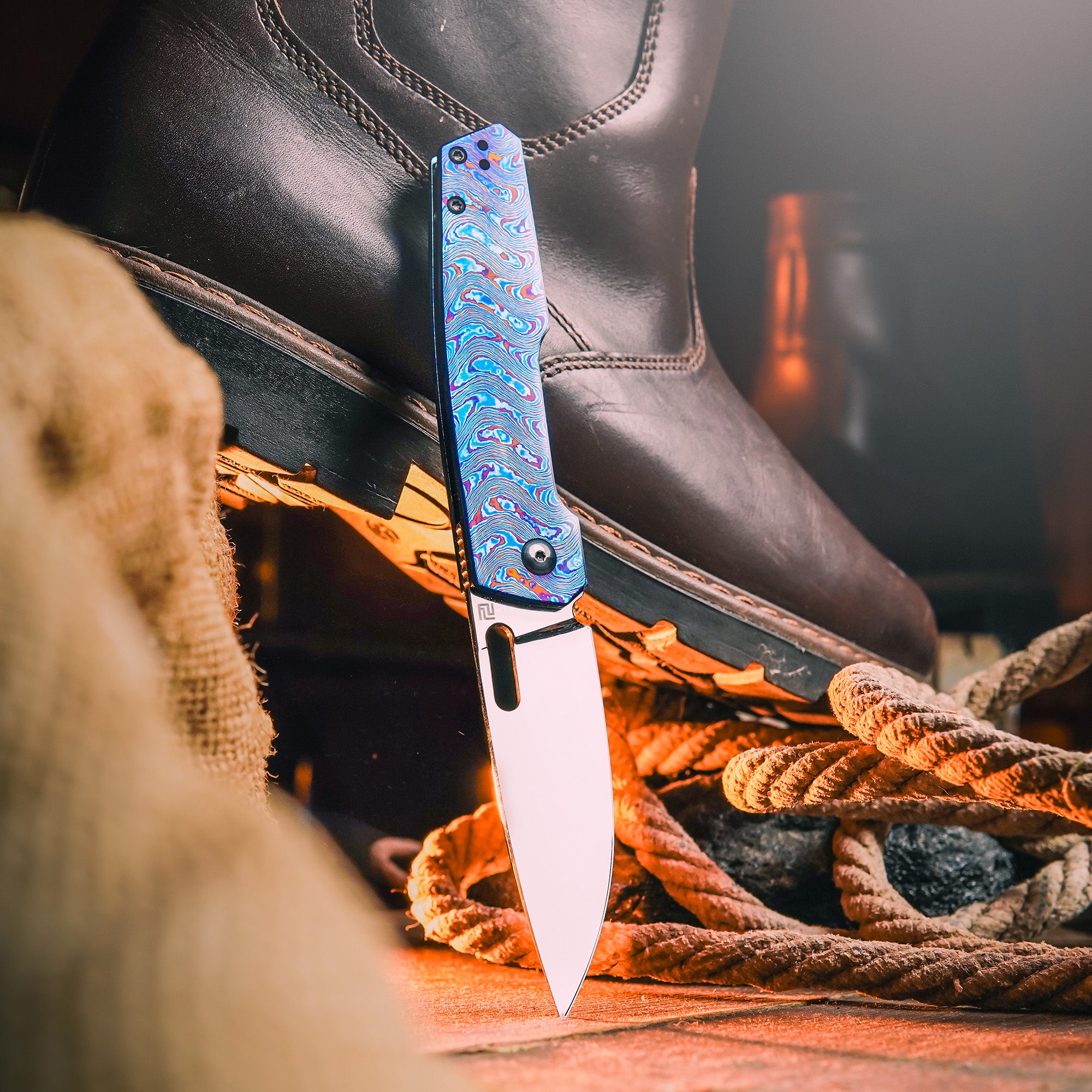
Above that band, damascus stops being only a blade choice. The Proponent ATZ-1820GSD ($598.50) and Tacit ATZ-1838GD ($645.00) pair a damascus blade with a titanium damascus handle — a related but separate material, where titanium layers are welded and manipulated the same way and read as flowing bands of grey, blue and gold (mokume-gane is the metalworking tradition behind that look). Both are currently showing sold out. The full pattern-welded selection is in the Damascus collection.
Which Pattern Should You Buy?
- First damascus knife, budget first: a random or simple ladder figure on FRN or steel — you get the material experience without paying for handle jewellery.
- You want the classic look: raindrop. It reads as damascus to anyone who knows knives, and it hides daily wear better than a tight geometric ladder.
- You want the technical look: twist or ladder, and keep it out of heavy abrasion.
- You are buying as an object: mosaic or a damascus-blade / titanium-damascus-handle flagship. These are collector pieces, and their prices reflect hours of billet work, not cutting performance.
- You want one knife for everything: buy the pattern you like on a blade whose steel and hardness you can actually verify — and treat the pattern as the finish, not the specification.
The Bottom Line
Six pattern names cover almost every damascus pocket knife on the market: ladder, twist, raindrop, random, mosaic and san mai. Each one is a description of how the billet was manipulated, and each will look different on the bench and age differently in a pocket. Pick the figure you enjoy, verify the steels and the hardness behind it, and maintain the etch the way you would any carbon-steel edge. That is the whole discipline of buying damascus.

Leave a comment
This site is protected by hCaptcha and the hCaptcha Privacy Policy and Terms of Service apply.