
Artisan Cutlery builds two of its own blade steels, and one of them gets almost none of the attention. AR-RPM9 has been the brand's workhorse since it arrived, and it has earned its own reputation across budget and mid-range folders. AR-SFII arrived later, uses the same in-house process, and sits further up the price ladder at fifty to a hundred dollars. It is also the steel behind some of the most interesting recent CJRB releases. This guide explains what the brand publishes about AR-SFII, which knives actually use it, and how it compares with AR-RPM9 and D2 on the spec sheets.
AR-SFII uses the same in-house spray-form process as AR-RPM9, tuned for longer edge retention.
What AR-SFII Is, According to Artisan Cutlery
The clearest description of the steel comes from the brand itself. On the Artisan Cutlery AR-SFII collection page, the company explains that AR-SFII utilizes the same process as AR-RPM9: a proprietary spray form method that produces an exceptionally fine grain structure, giving the steel additional toughness compared with other steels of similar formulas, along with improved sharpenability.
The brand is also explicit about why the steel exists. That same description states that over the development of AR-SFII the goal was to maintain the exceptional toughness of AR-RPM9 while pumping up the edge retention properties of the new steel. In plain terms, AR-SFII is not a different philosophy of steel. It is the same spray-form family with the balance pushed toward holding an edge longer.
Where AR-SFII Sits in the Lineup
Artisan Cutlery uses two in-house steel names, both prefixed with AR. AR-RPM9 is the volume steel; it appears across dozens of Artisan Cutlery and CJRB models and is heat treated to HRC 59-61 on the spec sheets. AR-SFII is the newer, higher-tier material, and it has spread from a single launch model into six current knives in the collection plus the Beest 1878P-GL.
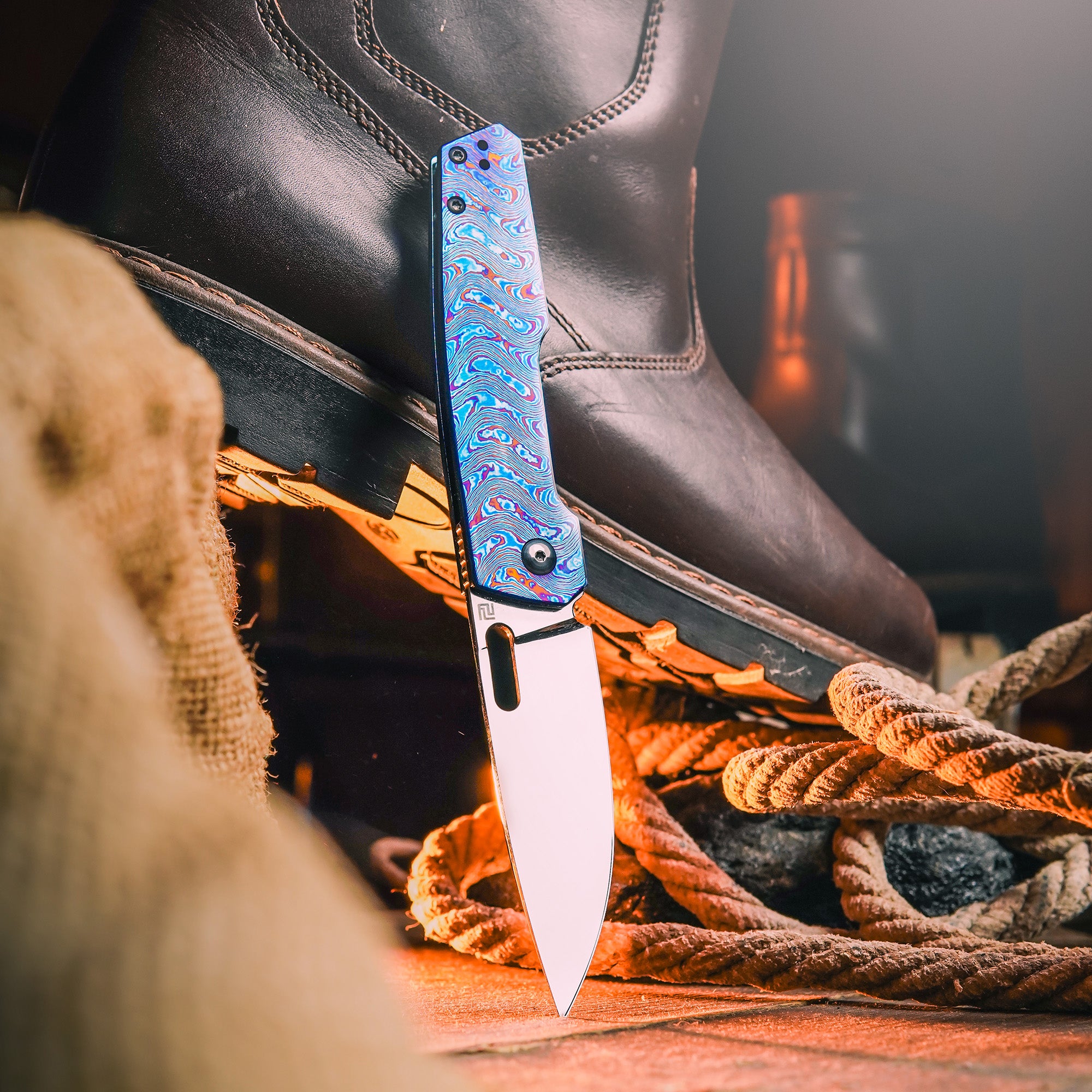
The naming matters when you shop, because a model may exist in both steels at very different prices. The CJRB Pyrite-Light J1945 is the cleanest example in the catalog: the FRN-handled AR-RPM9 version is listed at $29.99 to $39.99 depending on finish, while the AR-SFII version with the same FRN handle, the same 3.34-inch wharncliffe blade, the same button lock, and the same 80 g weight is listed at $49.99.
AR-SFII vs AR-RPM9: What the Spec Sheets Show
| Property | AR-SFII | AR-RPM9 |
|---|---|---|
| Process | Proprietary spray form (same process family) | Proprietary spray form |
| Published blade hardness | HRC 60-62 on most models; HRC 59-61 on the Pyrite-Light J1945 and Beest 1878P-GL | HRC 59-61 across catalog listings |
| Stated design goal | Keep AR-RPM9 toughness, raise edge retention | Balanced toughness, sharpenability, corrosion resistance |
| Typical in-stock price band | $49.99 to $99.99 | $29.99 and up, depending on model and handle |
| Models in stock | Pyrite-Light J1945, Maximal J1954, Bowie Pyrite J1942, Hectare-Alt J1935A, Large Pyrite-Alt J1925AL, Prado J1936, Beest 1878P-GL | Dozens, including the Beest ATZ-1878P, Arroyo, Holm and Latitude lines |
Two cautions about that table. First, hardness figures are published per model on each product sheet, so read the sheet for the exact knife rather than assuming one number for the steel. Second, the price band reflects what is actually buyable today; sold-out configurations are excluded.
Every AR-SFII Knife in the Current Catalog
These are the listings carrying AR-SFII blades, with the specifications exactly as the product sheets publish them and prices taken from in-stock variants:
| Knife | Blade | Hardness | Handle and lock | In-stock price |
|---|---|---|---|---|
| CJRB Pyrite-Light J1945 | 3.34 in wharncliffe, stone wash or black PVD | HRC 59-61 | FRN, button lock, 80 g | $49.99 |
| CJRB Maximal J1954 | 2.95 in drop point, stone wash | HRC 60-62 | G10, crossbar lock, 80 g | $59.99 |
| CJRB Bowie Pyrite J1942 | 3.15 in clip point, sand polish | HRC 60-62 | Micarta, button lock, 68.2 g | $89.99 |
| CJRB Hectare-Alt J1935A | 3.11 in wharncliffe, sand polish | HRC 60-62 | Micarta, crossbar lock, 72 g | $89.99 |
| CJRB Large Pyrite-Alt J1925AL | 3.70 in wharncliffe, sand polish or black PVD | HRC 60-62 | Steel, button lock, 148.5 g | $86.66 to $99.99 |
| CJRB Prado J1936 (Limited Edition) | 3.76 in clip point, sand polish | HRC 60-62 | Micarta, 90 g | $99.99 |
| Artisan Cutlery Beest 1878P-GL | 3.65 in drop point, black PVD | HRC 59-61 | Gold aluminum, liner lock, 98 g | $89.99 |
Look at the spread and a pattern appears. AR-SFII shows up on knives with wharncliffe and clip point blades, on compact two-and-a-half-inch folders and on a nearly four-inch full-size option, and in both finishes the brand favors for this steel: sand polish or a coated PVD blade. It is a design choice for a working blade, not a display steel.
What Artisan Cutlery Does Not Publish About AR-SFII
If you are hunting for an AR-SFII composition table with percentages of carbon, chromium, and vanadium, you will not find one in the brand's own materials, and this guide will not invent it. The published information covers the process (proprietary spray form, same as AR-RPM9), the claimed benefits (fine grain, additional toughness, improved sharpenability), the design goal (retain toughness, increase edge retention), and a per-model hardness range on every spec sheet.
The same is true of the name itself. Artisan Cutlery uses the four letters AR plus SFII on its listings and does not spell out an expansion in its published product material, so treat any confident decoding you read elsewhere with suspicion. What you can verify is what the sheets say: hardness, blade geometry, handle material, lock type, and weight, per knife.
Is AR-SFII a Good Everyday Carry Steel?
For daily cutting, the honest answer is that AR-SFII is aimed at the part of the job people notice. Edge retention is the property that decides how long you go between sharpening, and it is precisely the property the brand set out to raise relative to AR-RPM9. The published hardness range on most AR-SFII models, HRC 60-62, is a step above the 59-61 the brand lists for AR-RPM9, and higher hardness generally tracks with better edge holding at the cost of some ease in sharpening.
Practically, that means AR-SFII knives reward a light touch on the stones and regular stropping rather than frequent aggressive sharpening. Keep the edge maintained and you will sharpen less often than you would with the AR-RPM9 version of the same knife. If you like the shape of a model and want the least expensive way into it, AR-RPM9 is the sensible pick. If you want the version that stays sharp longer, AR-SFII is the one the brand built for that.
How to Sharpen and Care for an AR-SFII Blade
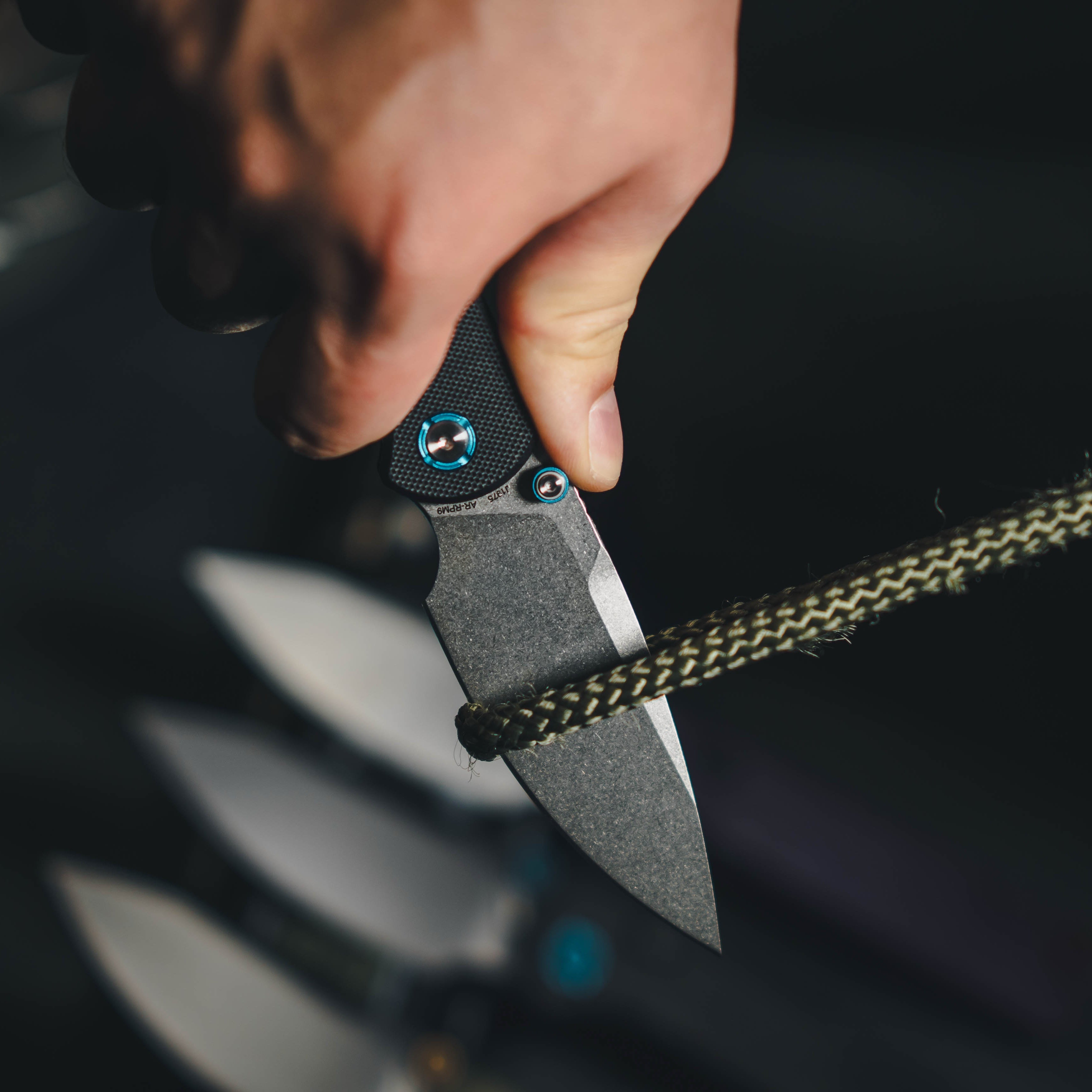
Two published facts shape how this steel should be maintained. It uses a spray-form process the brand describes as producing an exceptionally fine grain structure, which is the property that tends to make a steel behave predictably on a stone rather than chipping or fighting back. And most AR-SFII models are listed at a higher hardness than their AR-RPM9 siblings, which means the edge holds longer but takes a little more patience to restore once it is genuinely dull.
The practical routine follows from both. Touch the edge up on a strop or a fine stone while it is still slicing paper cleanly, rather than waiting for it to fail completely, because removing a lot of metal from a hard, fine-grained blade takes longer than maintaining it. Use lighter passes and let the stone do the work instead of leaning into it. Clean the blade and lock area after use, keep a thin film of lubricant on the steel, and avoid storing the knife wet. Our sharpening grit guide explains what each stone number is for, and the quarterly maintenance routine covers the rest of the knife around the blade.
AR-SFII vs D2 vs AR-RPM9: Choosing for Your Carry
| If you want | Pick | Reason |
|---|---|---|
| Lowest price for a proven design | D2 models such as the Eterno ATZ-1818P at $34.99 | D2 is a well-established tool steel at HRC 59-61 in this catalog and the cheapest way into a solid folder |
| Balanced stainless performance at a mid price | AR-RPM9 models such as the Latitude J1975 at $54.99 | The brand's volume spray-form steel, listed at HRC 59-61 across the lineup |
| Longer edge holding in the same designs | AR-SFII models such as the Pyrite-Light J1945 at $49.99 | Same spray-form process, published at HRC 60-62 on most models, built to raise edge retention |
Steel is only part of the decision. Lock type, blade shape, and handle material usually matter more in daily use than a few points of hardness, and the catalog lets you compare all three directly on the AR-SFII collection page and the AR-RPM9 collection page.
Which AR-SFII Knife Should You Start With?
- First AR-SFII knife, lowest risk: the CJRB Pyrite-Light J1945 at $49.99. It is the smallest financial step into the steel, and the wharncliffe blade and button lock make it an easy daily carry.
- Crossbar lock fan: the CJRB Maximal J1954 at $59.99, a 2.95-inch drop point on a compact G10 handle.
- Traditional look: the CJRB Bowie Pyrite J1942 at $89.99, a clip point blade on micarta.
- Full-size work knife: the CJRB Large Pyrite-Alt J1925AL, a 3.70-inch wharncliffe on a steel handle, from $86.66.
- Artisan Cutlery branding and a liner lock: the Beest 1878P-GL at $89.99, with a black PVD-coated drop point blade in a gold aluminum handle.
Care is the same as for any modern stainless folder: keep the pivot clean, keep a light film of lubricant on the blade, and touch up the edge with a strop before it goes fully dull. Because the steel is designed to hold an edge longer, the failure mode to avoid is letting a dull edge sit until you need a full resharpening session.
AR-SFII is the least documented steel in the Artisan Cutlery catalog and, judging by the spec sheets, the one the brand is investing in for its higher-tier releases. Start with the model whose blade shape and lock you actually want, and let the steel be the upgrade rather than the whole decision, for reliable everyday carry.

Leave a comment
This site is protected by hCaptcha and the hCaptcha Privacy Policy and Terms of Service apply.