
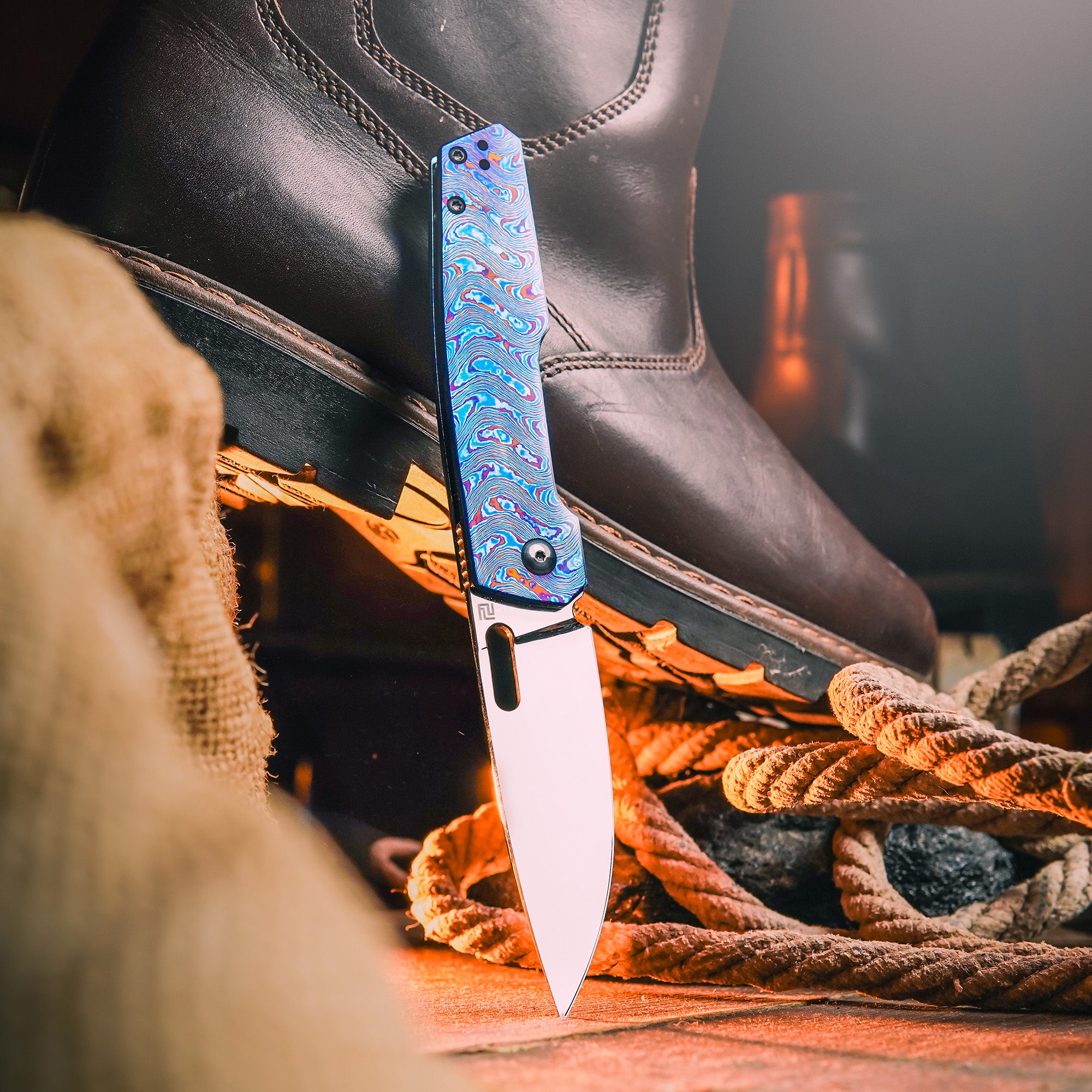
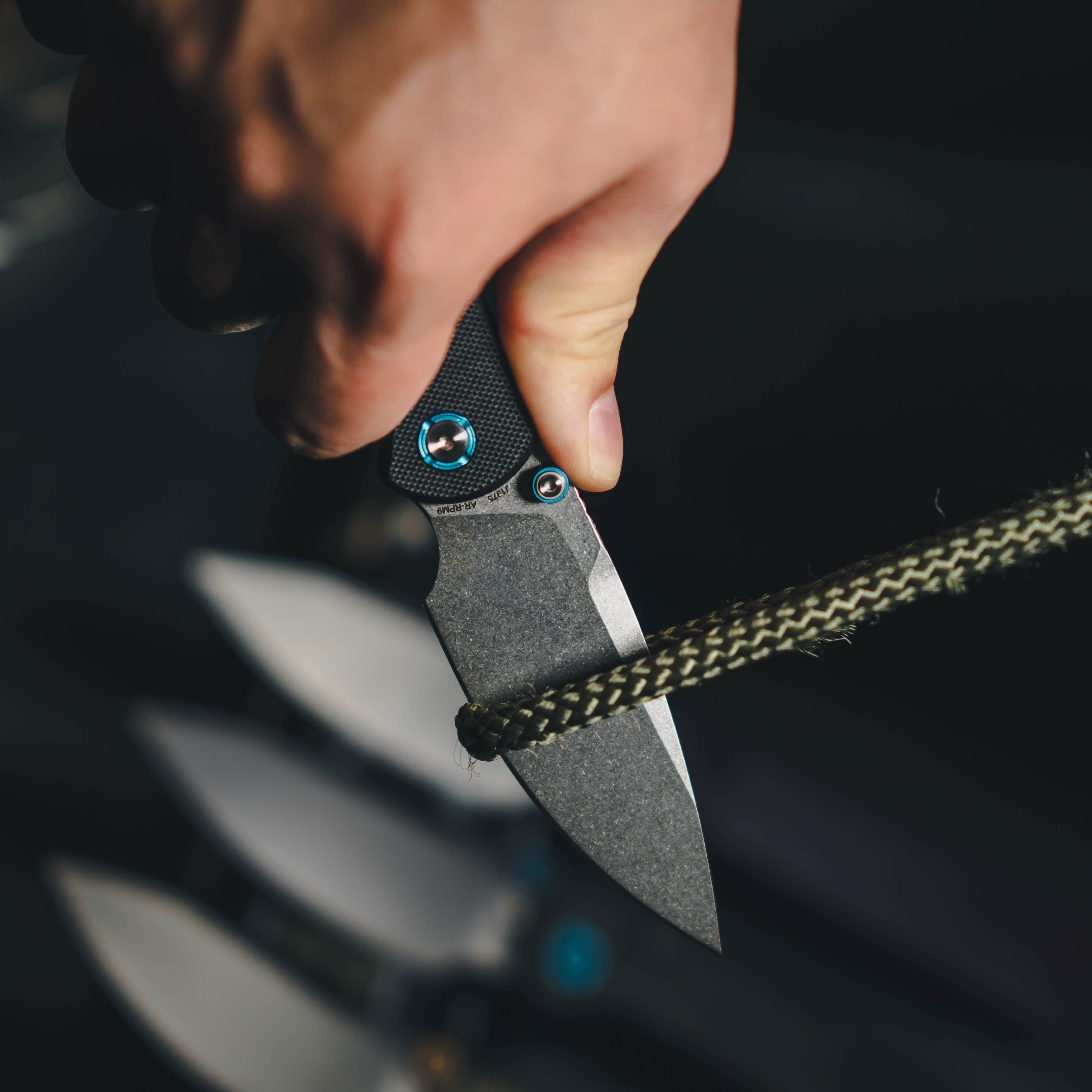
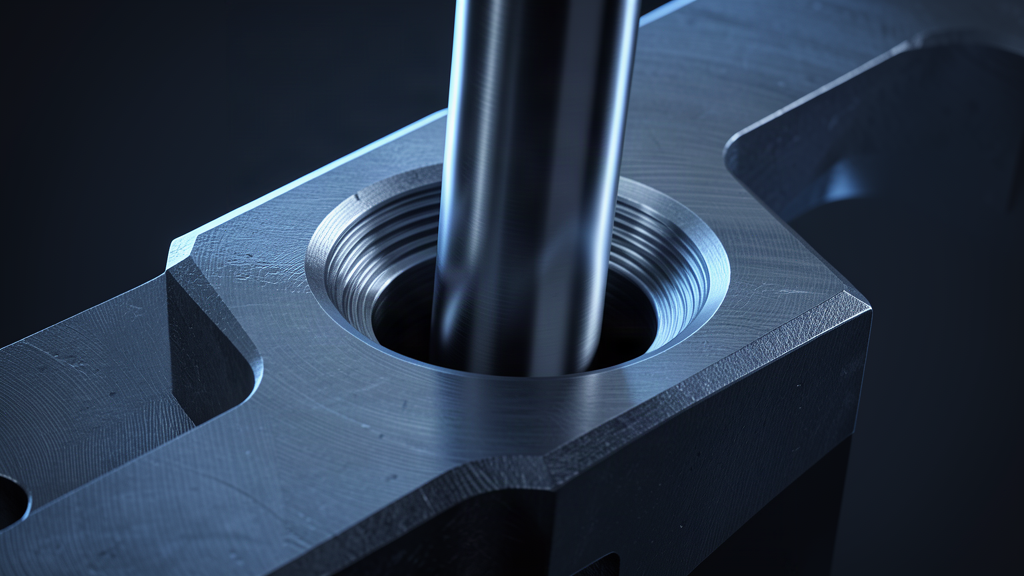
The CJRB Frack is the largest folding knife CJRB builds around a button lock, and it is the line where the brand stopped designing a small knife bigger and started designing a big knife properly. The Frack J1931 pairs a 3.9-inch blade with an oversized button lock, a teardrop thumb hole and a full-size finger choil — and it comes in two very different builds, a steel-handled AR-RPM9 working knife and a 102-gram CPM S90V titanium version.
The Frack J1931 pairs an oversized button lock with a teardrop thumb hole and a full-size finger choil.
Here is what the live listings actually say, including where an older description line disagrees with the spec block.
Frack J1931 specifications
All four Frack listings share the same frame, the same pivot and the same lock. What changes is blade steel, blade finish and scale material.
| Specification | Frack J1931 |
|---|---|
| Blade length | 3.9 in (99 mm) |
| Blade thickness | 0.13 in (3.2 mm) |
| Blade grind | Flat |
| Blade style | Drop point (spec block) |
| Overall length | 8.9 in (226 mm) |
| Closed length | 5 in (127 mm) |
| Pivot assembly | Ceramic ball bearing |
| Lock type | Button lock, oversized |
| Weight | 143-150 g steel handle; 102 g titanium handle |
One caveat before you shop it: the description paragraph on two Frack listings still reads a 4-inch long clip point blade, while every spec block on every Frack listing reads 3.9 in (99 mm) with a drop point profile. The spec blocks agree with each other and with the overall and closed lengths, so that is what this guide uses. If you are comparing the Frack against a 4-inch knife you already own, measure the difference rather than trusting the summary line.
The AR-RPM9 steel-handle build
The core Frack is a full-steel knife, and the listing is unusually explicit about why: the design brief was to be long, light and powerful, and the scales were trimmed to the bare minimum and weight relieved to keep the balance in hand. Two handle finishes are offered — a plain steel handle and a Frag-pattern version — each in stone wash or black PVD.
| Handle | Blade finish | Price | Availability |
|---|---|---|---|
| Steel | Black PVD coating | $42.99 | In stock |
| Steel | Stone wash | $59.00 | In stock |
| Steel, Frag pattern | Stone wash | $59.80 | In stock |
| Steel, Frag pattern | Black PVD coating | $69.00 | In stock |
The steel-handle Frack runs AR-RPM9 at HRC 59-61 and weighs 150 g / 5.29 oz in the plain version and 143 g / 5.04 oz with the Frag pattern. That is a genuinely heavy folder for its length — the weight is the price of steel scales, and it is the first thing to understand about this knife. In return you get a 5-inch closed package that fills a hand and a blade long enough for real work.
The CPM S90V titanium build
The second Frack is a different animal: the same 3.9-inch blade in CPM S90V at HRC 60-62, mounted in Frag-pattern titanium scales. The weight drops to 102 g / 3.6 oz, roughly a third lighter than the steel version, and the blade finish changes to either stone wash or sand blast.
| Version | Blade steel | Blade finish | Weight | Price | Availability |
|---|---|---|---|---|---|
| Titanium, Frag pattern | CPM S90V | Stone wash | 102 g / 3.6 oz | $199.99 | Sold out |
| Titanium, Frag pattern | CPM S90V | Sand blast | 102 g / 3.6 oz | $199.99 | Sold out |
Both titanium Fracks are out of stock at the time of writing, which is worth knowing before you fall in love with the 102-gram number. S90V is the reason the tier exists: it trades sharpenability for edge retention, and it is the steel the brand uses on its premium editions across the lineup — see the S90V vs M390 comparison if you are deciding whether that trade is worth $199.99 to you.
What the oversized button lock changes
A button lock is a plunge-style lock: the blade is held by a spring-loaded button passing into a cut in the tang, and pressing the button releases it. On the Frack the button is deliberately oversized, which the listing credits with quick deployment in any situation — a bigger surface means you find it without looking.
The practical difference between a button lock and the liner lock that carries most of the CJRB lineup is where your thumb goes. A liner lock puts the release on the frame's inner edge, so the knife has to be turned to close it. A button lock puts the release on the flat of the handle, so the knife closes without changing your grip — the safest way to use that is to let the blade fall onto your finger rather than into it, but the one-handed cycle is genuinely shorter.
If you want the mechanism explained from the inside, the recoil lock and crossbar lock article covers the family of spring-loaded, tang-engaging locks with diagrams.
The thumb hole and the choil
Two details set the Frack apart from the rest of the CJRB range. The first is a teardrop-shaped thumb hole instead of thumb studs — the hole lets you roll the blade open with your thumb pad or flick it with the middle finger, and it removes two studs that could otherwise catch on a pocket. The second is a full-size finger choil at the base of the edge, which gives you a choked-up grip for detail work and a natural index point for closing the knife.
Combined with the caged ceramic ball bearing pivot, the deployment is the part of this knife most owners describe first. The trade-off of the hole over studs is that the blade is drilled, which is a stiffness consideration rather than a strength one at 0.13 in of stock — the flat grind keeps the spine thick where it matters.
Carrying a 3.9-inch folder
Five inches closed and 143-150 g in steel scales is a knife you notice. That is the honest framing for this model: it is designed as a full-size backup blade rather than a discreet office carry. Three things mitigate that in practice:
- The titanium version at 102 g is the same knife with the weight problem solved, at roughly three times the price of the entry AR-RPM9 variant.
- The Frag-pattern steel handle is 7 g lighter than the plain steel handle — a small but real difference from the machined relief.
- The black PVD blade and handle keeps the whole package visually low profile in a pocket, and the coating adds wear resistance to the blade itself.
Blade length also matters for carry rules. A 3.9-inch blade is longer than what many jurisdictions allow for a folding knife carried in public, so check your local limit before treating the Frack as a daily carry — the Frack collection page and the product specs give you the measurement to check against.
Frack vs the rest of the CJRB line
If the Frack sounds like too much knife, the two closest alternatives in this catalog are worth a look. The Doubletap is a 3.86-inch recoil-lock folder with a similar tactical intent but a crossbar-style lock and a wider handle material spread, including aluminium and titanium. The Latitude J1975 is the opposite end of the range — a light, top-liner-lock everyday carry knife that disappears in a pocket.
For the model numbering itself, the J-code guide explains how J1931 relates to the rest of the catalog.
Which Frack to buy
- Cheapest way into the platform: the plain steel handle with a black PVD blade at $42.99. Same frame, same lock, same 3.9-inch blade.
- Best value in the family: the Frag-pattern steel handle in stone wash at $59.80 — lighter than the plain handle and a step up in finish.
- Weight matters more than budget: a CPM S90V titanium Frack at $199.99, if you can find one in stock, drops 40 g and moves up a steel tier.
- First full-size button lock: the AR-RPM9 stone wash version at $59.00 is the straightforward choice — easy to sharpen, generous blade length, unchanged geometry.
The Frack is a large knife that has been deliberately designed to stay light for its size, and the two builds let you decide whether you pay for that with money or with grams.
See both builds and current availability in the CJRB Frack collection, or browse the whole CJRB lineup and the full Artisan Cutlery catalog — folding knives built for reliable everyday carry.

Leave a comment
This site is protected by hCaptcha and the hCaptcha Privacy Policy and Terms of Service apply.