

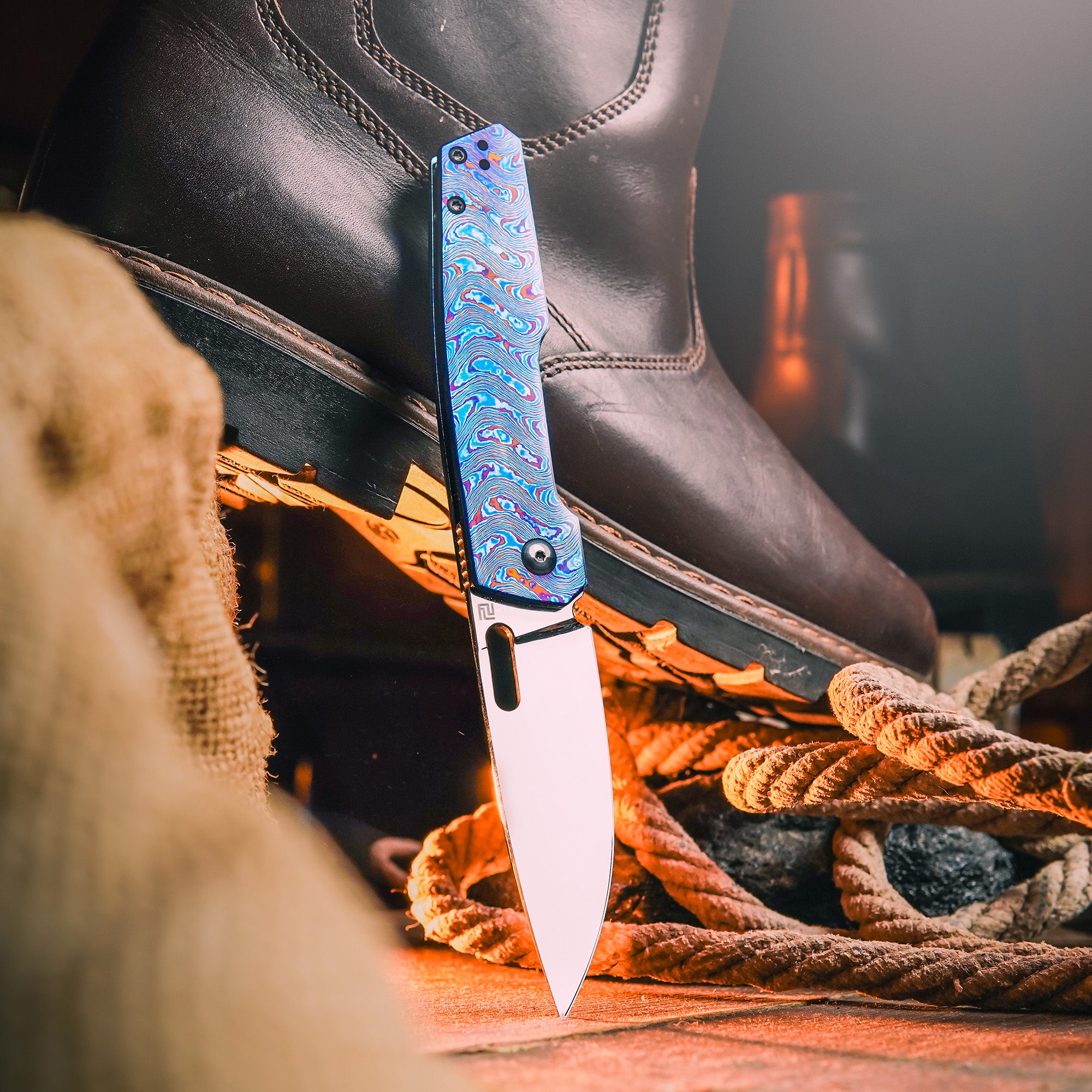
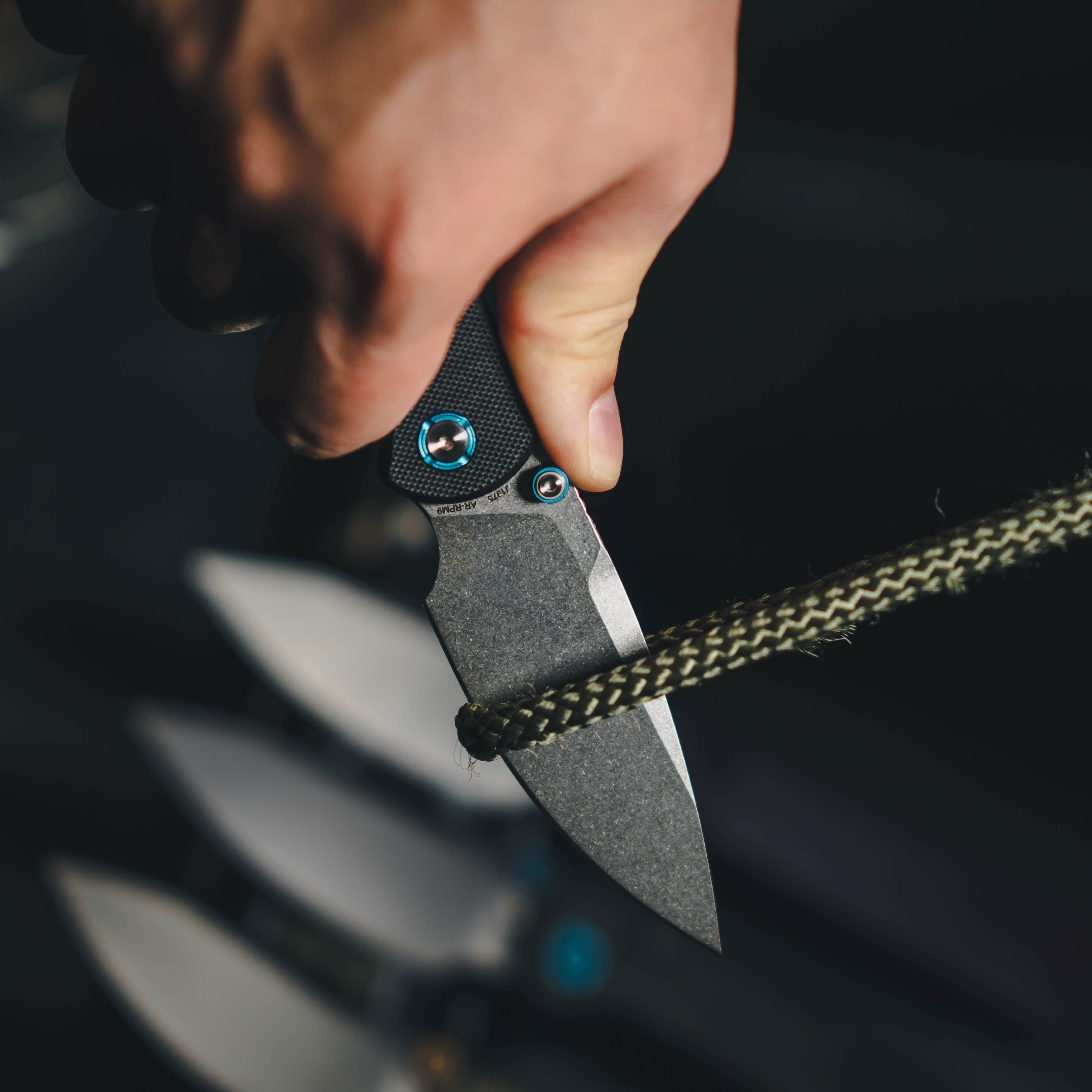
The Artisan Cutlery Sirius is one of the brand's most enduring premium designs, and it is no longer a single knife. Today the Sirius name covers a 1849-series family of more than a dozen active configurations that range from a $70 AR-RPM9 G10 folder to a $400 CPM 20CV titanium build with a titanium-damascus clip. All of them share the same sleek silhouette, the same Ray Laconico design DNA, and the same smooth ceramic ball bearing pivot, but they differ sharply in steel, handle material, finish, weight, and price.
One Ray Laconico platform, three material tiers: titanium, fat carbon, and G10 or micarta builds make up the Sirius 1849 family.
If you have been looking at the Sirius and wondering which version is actually worth your money, this family guide walks through every tier of the lineup, what each configuration is built for, and how to choose the right one for your carry style. Whatever tier you land on, you are getting a folder designed by one of the most respected minimalist knife makers working today, and that common thread matters more than the spec sheet alone.
What the Sirius Is: A Ray Laconico Gentleman's Folder
The Sirius 1849 is a gentleman's flipper designed by Ray Laconico, whose work is built around clean lines, slim profiles, and details that disappear when the knife is closed. The drop point blade opens either from a front flipper tab or from a recessed thumb stud, and the whole blade is carried on Artisan's ceramic ball bearing pivot system, so deployment is fast and fluid whichever method you prefer.
Two small design details set the Sirius apart. First, when the knife is closed, the blade nearly disappears into the handle, giving the folder a deceptively small pocket footprint. Second, the thumb stud tucks into a milled groove in the handle when closed, which keeps the profile clean and stops the stud from snagging pocket fabric. Add a simple, low-key pocket clip and you have a knife that reads as an object of design rather than a tactical tool.
Across the family, the platform geometry stays consistent: a 3.54-inch (89.88 mm) drop point blade with a flat grind and a blade thickness of 0.11 inch (2.7 mm), an overall length of 8.04 inches (204.13 mm), and a closed length of 4.5 inches (114.26 mm). Blade hardness is listed at HRC 59-61 across the steel options. What changes between versions is the blade steel, the handle material, the finish, and the weight, which is where the family splits into three clear tiers.
The 1849 Sirius Family Structure: G vs P
Artisan organizes the Sirius with the same code logic it uses across its catalog. The 1849G models are the premium builds with titanium or fat-carbon-and-titanium handles. The 1849P models are the more accessible builds with G10 or micarta handles. Both tiers share the same blade geometry and the same HRC 59-61 hardness target, so the handle and steel tiers are where your money actually goes.
| Version | Blade steel | Handle | Blade finish | Weight | Price |
|---|---|---|---|---|---|
| 1849G | S35VN | Titanium | Satin | - | $200.00 |
| 1849G | CPM 20CV | Titanium | Black PVD | - | $216.00 |
| 1849G | S35VN | Fat carbon + titanium | Sand blast | 95 g / 3.35 oz | $237.49 |
| 1849G | CPM 20CV | Titanium, titanium-damascus clip | Black PVD | 3.50 oz | $399.75 |
| 1849P | AR-RPM9 | G10 | Satin | 90 g / 3.18 oz | $70.00 |
| 1849P | AR-RPM9 | G10 | Black PVD | - | $70.00 |
| 1849P | S35VN | Micarta (OD green, satin) | Satin | 85 g / 3.0 oz | $128.55 |
| 1849P | S35VN | Micarta (dark toneways) | Black PVD | - | $128.55 |
| 1849P | S35VN | Micarta (dark toneways) | Black DLC | 95 g / 3.35 oz | $128.55-$139.99 |
The 1849G Premium Builds: Titanium and Fat Carbon
The premium Sirius models are where Artisan shows off its handle work. The entry point is the all-titanium 1849G with a satin S35VN blade at $200. S35VN is a Crucible powder metallurgy stainless that balances edge retention, toughness, and ease of sharpening better than almost any other premium steel, and it is the steel Artisan uses across most of its titanium models, so the Sirius sits in good company.
Above that sits a CPM 20CV black PVD coated titanium version at $216. 20CV is the powder metallurgy stainless that anchors the very top of Artisan's steel lineup, with very high edge retention that makes it a favorite for EDC users who want to sharpen less often. If you want the full-dress version of the same knife, there is a $399.75 build that pairs the black PVD 20CV blade with a titanium-damascus pocket clip, pushing the Sirius into true collector territory.
In between, the fat carbon versions at $237.49 give the Sirius its most distinctive look. The 1849G fat carbon builds pair a sand blast S35VN blade with layered fat carbon fiber and titanium handle scales, including the Copper Camo colorway that has become a signature Artisan look. At 95 grams, they are only slightly heavier than the micarta models, despite the metal handle structure.
The premium builds use Artisan's titanium frame lock, reinforced with a hardened steel lock bar insert where the lock contacts the blade tang. That steel-on-steel interface is the detail that separates a frame lock built for years of use from one that will develop lock rock as the titanium wears.
The 1849P Accessible Builds: G10 and Micarta
The 1849P tier keeps the identical Sirius blade and silhouette but swaps the materials to bring the price down dramatically. The most affordable versions pair an AR-RPM9 blade with G10 handles at $70 in both satin and black PVD finishes. AR-RPM9 is Artisan's powder metallurgy budget steel, offering respectable edge retention and corrosion resistance at a fraction of the cost of the premium steels. The G10 builds come in at about 90 grams and are arguably the best-value Sirius you can buy.
Step up to the S35VN micarta versions at $128.55 to $139.99 and you get the same premium blade steel as the $200 titanium model, wrapped in canvas micarta that weighs even less: the satin OD green version comes in at 85 grams, and the black DLC coated versions at 95 grams. The micarta builds come in olive drab green and several dark toneways, with satin, black PVD, and black DLC blade finishes across the range.
For buyers who want the S35VN performance of the flagship without the titanium price tag, the micarta 1849P is the sweet spot of the whole family, and because micarta ages and develops character with use, each one ends up looking slightly different over time.
Choosing Your Sirius: Which Build Should You Buy?
With the whole family laid out, the choice comes down to how you carry and what you value:
- Budget entry ($70): the AR-RPM9 G10 1849P is a genuine Laconico design for the price of a mainstream production folder, and the satin and PVD options cover both casual and dressier carry.
- Best daily value ($128.55-$139.99): the S35VN micarta 1849P gives you flagship blade steel in a light, warm-handling package. Choose satin OD green for field carry or the DLC coated versions for a hard-wearing black blade.
- Premium EDC ($200-$237.49): the titanium and fat carbon 1849G models add the frame lock, the metal handle structure, and the visual drama. The fat carbon Copper Camo version is the one that gets noticed.
- Collector flagship ($399.75): the CPM 20CV titanium build with the titanium-damascus clip is the Sirius at its most complete, and it is the version most likely to appreciate in a collection.
Steel, Finish, and Care Notes for the Sirius Family
Because the family spans AR-RPM9, S35VN, and CPM 20CV, the steel articles on this site are worth a read before you commit: AR-RPM9, S35VN, and CPM 20CV each behave differently at the sharpening stones, and the coated versions need a different approach than the satin blades. The knife finish guide and the coated blade sharpening guide cover both.
Handle care is equally tier-specific. Titanium handles scratch and develop a natural patina that many owners embrace, and they can be cleaned and even re-anodized later; the titanium handle care guide walks through it. Micarta needs almost nothing beyond an occasional wipe, and fat carbon fiber is one of the most stable handle materials available, as covered in the fat carbon guide. Finally, if you are comparing the Sirius against other premium Artisan folders by weight and size, the knife weight and size guide explains how to read those numbers.
How the Sirius Fits Artisan's Premium Lineup
It helps to know where the Sirius sits in the wider Artisan Cutlery catalog before you buy. Artisan builds a lot of titanium folders, but the Sirius occupies the gentleman's end of the range: where models like the Trust or the Butcherling push aggressive blade shapes and tactical styling, the Sirius stays slim, restrained, and pocket-friendly, which is exactly the Laconico signature. If your carry rotation is built around one dressier knife for the times a heavy tactical folder feels out of place, the Sirius is that knife, and the fact that the family now reaches from an everyday $70 build to a $400 flagship means you do not have to compromise on the design to fit a budget.
Final Verdict on the Sirius Family
The Sirius is that rare knife line where the cheapest version and the most expensive version share the same designer, the same blade geometry, and the same pivot system, and the difference is entirely in materials. That makes it one of the easiest families in the Artisan Cutlery catalog to shop: decide what you want to spend, and the steel and handle choice at each price point is essentially already made for you by the tier structure. Whether you start with the $70 G10 version or go straight for the $400 titanium flagship, the Sirius delivers the same clean Laconico experience, for reliable everyday carry.
Explore the current Sirius lineup and the full Artisan Cutlery catalog for reliable everyday carry.

Leave a comment
This site is protected by hCaptcha and the hCaptcha Privacy Policy and Terms of Service apply.