
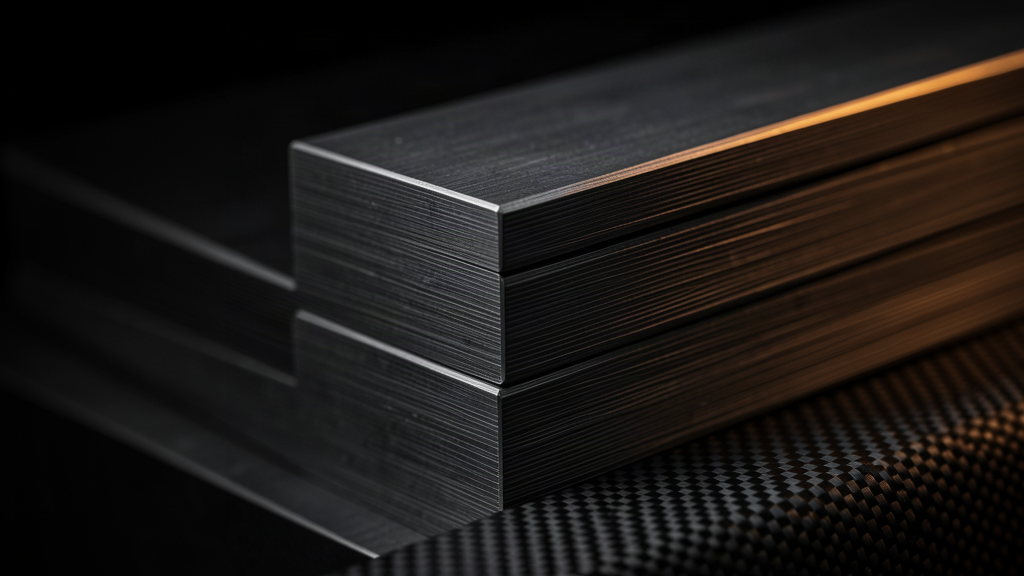
The Cygnus is one of the clearest examples of how Artisan Cutlery structures a knife family: one design, one 3.54 inch blade profile, and then a deliberate ladder of materials that runs from a $52 work knife to a $198 titanium frame lock. If you have been comparing Artisan Cutlery Cygnus listings and wondering why the same silhouette shows up at four very different price points, the answer is simpler than it looks. Nothing about the geometry changes. Only the blade steel, the handle material, the clip, and the lock.
The Cygnus platform is fixed across the family: a 90 mm flat ground blade, 3.8 mm stock, and a ceramic ball bearing pivot in every edition.
What Makes the Cygnus Different
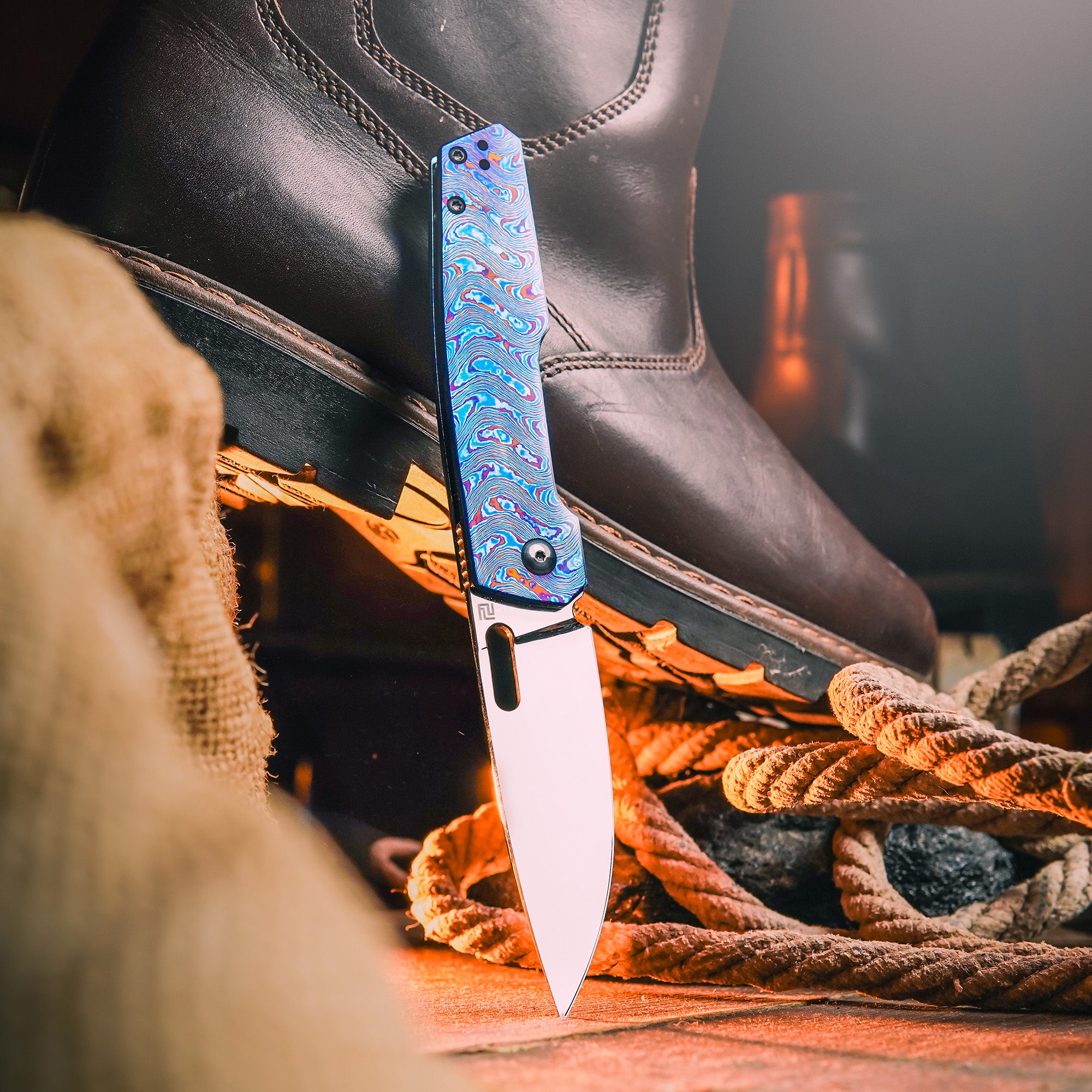
Artisan Cutlery describes the Cygnus as an angular flipper that is both tactical and practical, and the shape lives up to that. The handle is milled with faceted flats rather than smooth slabs, which gives the knife a visual edge without adding bulk. The company also points out that the profile is thin enough to slide a hand past in a pocket, which is the practical benefit of that angular milling: you get a full 8.46 inch overall length without a handle that bulges off the pocket seam.
Artisan's spec sheet lists the blade as a drop point, while the marketing copy for the titanium model describes a reverse tanto. In hand those two descriptions point at the same thing: a stout, slightly heavy-tipped point with a straightish spine and a gentle rise to the tip. It is a working profile, not a needle, so it takes a bit of pressure without complaining.
The Cygnus Lineup at a Glance
| Model | Blade steel | Handle | Lock | Price |
|---|---|---|---|---|
| Cygnus ATZ-1827G | S35VN, satin finish, HRC 59-61 | Titanium | Frame lock | $198.04 |
| Cygnus ATZ-1827P (G10) | D2, stonewash, HRC 59-61 | G10 | Liner lock | $52.49 |
| Cygnus ATZ-1827P (carbon fiber) | D2, stonewash, HRC 59-61 | Carbon fiber | Liner lock | $64.49 |
Both D2 editions share a listing template, so their spec blocks repeat the same handle field. The two knives are told apart by SKU: 1827P-BKF and 1827P-BKC for the G10 models, 1827P-CF for carbon fiber. Colours follow the same logic, with Black and Blue in G10 and a single Carbon Fiber finish at the top of the budget tier.
Shared Platform: Specs Every Cygnus Inherits
The interesting part of the Cygnus family is how much of the specification is fixed. Every configuration, from the $52.49 entry knife to the $198.04 titanium model, is built on the same dimensions and the same pivot hardware.
| Specification | Cygnus ATZ-1827 (all editions) |
|---|---|
| Blade length | 3.54 in (90 mm) |
| Blade thickness | 0.15 in (3.8 mm) |
| Blade grind | Flat |
| Overall length | 8.46 in (215 mm) |
| Closed length | 4.92 in (125 mm) |
| Blade hardness | HRC 59-61 |
| Pivot assembly | Ceramic ball bearing |
| Listed weight | 4.23 oz (120 g) |
That ceramic ball bearing pivot is the sleeper detail. It is the same bearing system Artisan lists on the titanium flagship, and it is what makes a $52 D2 Cygnus feel like a more expensive knife in the hand. Bearings reduce the friction the blade has to overcome, so a flipper this long fires out with a light touch and a crisp stop instead of a mushy swing. Our guide to pivot systems and how to maintain smooth action covers why that matters over years of use.
ATZ-1827G: S35VN and Titanium
The 1827G is the Cygnus in its fully dressed form. The blade is CPM S35VN, a Crucible powder metallurgy stainless hardened to HRC 59-61 and finished in satin, which keeps the grind lines visible under light. S35VN is the steel many makers reach for when they want stainless behaviour without giving up toughness, and our S35VN steel explained article goes through the chemistry and what it means at the stone, while the broader knife steel reference covers how these grades relate to one another.
Around that blade sits a machined titanium handle with a matching titanium clip, locked by a frame lock. Titanium is the premium pick here for one reason that shows up in daily carry: it is light for its strength and it does not rust, so a knife that lives in a pocket against sweat and humidity does not develop the surface rust a steel frame eventually will. It does scratch, and it can be refreshed, which is what our titanium handle care guide is about.
Four colourways cover the model: Black, Blue, Gray, and Green, all at $198.04.
ATZ-1827P in D2: G10 and Carbon Fiber
Drop down and the geometry does not change, only the materials. The D2 editions keep the 90 mm blade, the 3.8 mm stock, the flat grind, the 215 mm overall length, and the ceramic bearing pivot. What changes is the steel, the finish, and the lock.
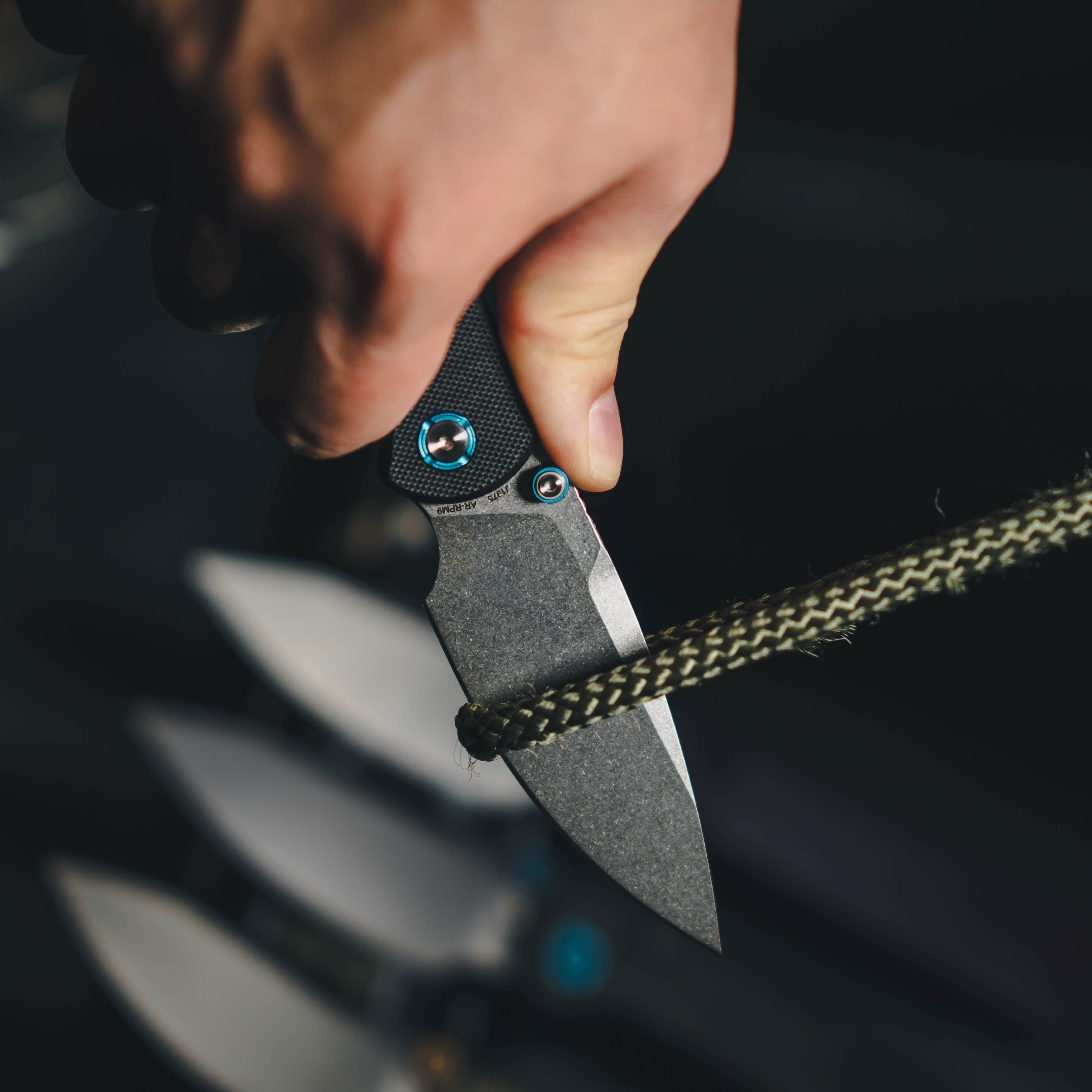
D2 is a tool steel rather than a stainless. It trades some corrosion resistance for a lot of wear resistance, and at HRC 59-61 it holds a working edge for a long time in cardboard, tape, and rope. The trade-off is that D2 will spot if you store it damp, which is the whole subject of our D2 steel patina and corrosion guide. The blade finish on these models is stonewash, which is a practical choice on a tool steel: a fine random texture hides the small scuffs a user knife collects, and it is the finish described in our knife finish guide.
Handles split into two options. G10 at $52.49 is the value pick: a layered fibreglass composite that is effectively impervious to moisture, temperature, and the kind of knocks a work knife takes, and it grips well when wet. Carbon fiber at $64.49 is the same knife with a lighter, stiffer handle and a woven carbon fiber surface that reads as a premium material. If you want the detail on how carbon fiber behaves in a folding knife, our carbon fiber handle guide covers weight, durability, and care.
Both D2 editions use a liner lock rather than a frame lock, paired with a steel clip instead of titanium. That is the honest trade at this price: the mechanism is proven, easy to clean, and simple to maintain, and you are not paying a titanium premium for a knife that is going to be used.
Which Cygnus Should You Buy?
The decision comes down to what you want the knife to do.
- Buy the ATZ-1827P in G10 ($52.49) if this is a working knife. You get the full Cygnus platform, the bearing pivot, and a handle material that shrugs off abuse. D2 will outlast most users' sharpening discipline, and you will not baby a $52 knife.
- Buy the ATZ-1827P in carbon fiber ($64.49) if you want the same user profile with a lighter, stiffer handle and a more refined look for a $12 premium.
- Buy the ATZ-1827G in S35VN and titanium ($198.04) if corrosion resistance and long-term ownership matter more than price. S35VN is far more forgiving of humidity than D2, the titanium handle and clip will not rust, and the frame lock removes the liner from the equation entirely.
If you are still deciding between the two lock types, our comparison of liner locks, frame locks, and other lock types explains the mechanical difference, and the lock strength comparison covers how they hold up under load.
Care and Maintenance
The Cygnus is easy to live with. Bearings do not need much attention beyond keeping grit out, and a drop of light oil on the pivot every few months is enough. Keep the blade dry after use, especially on the D2 models, and wipe the frame down with a dry cloth rather than letting moisture sit in the milling. A full rundown of intervals is in our folding knife maintenance schedule, and the cleaning steps are covered in how to clean and sanitize your EDC knife.
If the action ever feels slow, do not reach for the pivot screw first. A drop of lubricant, described in our knife lubrication guide, usually solves it, and the break-in behaviour of a new knife is explained in how to break in a new folding knife. If the blade has developed side-to-side movement instead, that is a different problem with a different fix, covered in folding knife blade play.
Where the Cygnus Fits in the Artisan Lineup
The Cygnus sits in the middle of the Artisan range in size and at the top of the value curve in materials. It is a larger knife than the compact, dress-oriented models and a more angular one than the classic drop point flippers, which makes it a good pick for someone who wants one knife that can be carried to work and out on a weekend. If you want to see how it lines up against the rest of the catalogue, start with the full lineup guide, the titanium folding knives guide, and the family guides for the Sirius, the Tomahawk, and the Wren.
For pricing tiers across the whole brand, the under $100 and under $200 buying guides put the Cygnus against its stablemates directly.
The three Cygnus configurations are in the catalogue now: Cygnus 1827G in S35VN and titanium, Cygnus 1827P in D2 and G10, and Cygnus 1827P in D2 and carbon fiber. The full range is in the Artisan Cutlery collection.
Cygnus FAQ
Is the Cygnus a frame lock or a liner lock?
Both, depending on the edition. The S35VN titanium ATZ-1827G uses a frame lock, where the handle slab itself forms the locking bar. The two D2 ATZ-1827P models use a liner lock, which places a separate spring steel liner inside the handle.
How long is the Cygnus blade?
3.54 in (90 mm) on every configuration, with 0.15 in (3.8 mm) stock and an overall length of 8.46 in (215 mm). A 90 mm blade is under the three inch threshold that many jurisdictions use, which is worth checking before you carry, since rules vary by state and country.
What steel is the Cygnus available in?
Two steels: CPM S35VN on the titanium model and D2 on the G10 and carbon fiber models. All three are hardened to HRC 59-61.
Does the Cygnus run on bearings or washers?
Bearings. Artisan lists a ceramic ball bearing pivot assembly on all three configurations.
Which Cygnus is the best value?
The $52.49 D2 G10 model. It keeps the entire platform, including the bearing pivot and the 90 mm blade, and only gives up corrosion resistance and the titanium handle, neither of which matters much on a knife you maintain.

Leave a comment
This site is protected by hCaptcha and the hCaptcha Privacy Policy and Terms of Service apply.